
Service Dog vs ESA vs Therapy Dog: What Virginians Need to Know
People use these terms interchangeably, but the law does not. Whether your animal can live in a no-pets apartment, walk into a restaurant or board a plane depends entirely on which category it falls into.
Service Dog
Trained tasks for a physical or sensory disability
Psychiatric Service Dog
Trained tasks for a mental health disability
Emotional Support Animal
Comfort by presence, no task training
Therapy Dog
Visits others in hospitals, schools and libraries
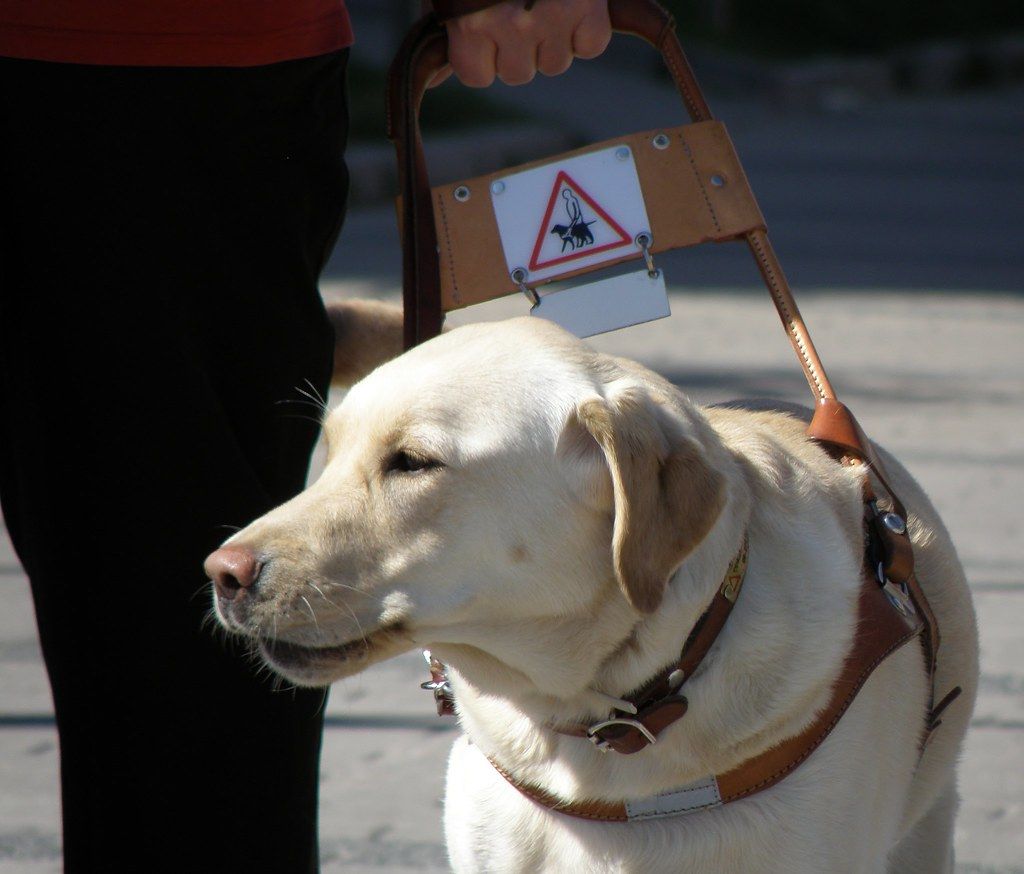
Background: guide dog Eevi, photo by smerikal, CC BY-SA 2.0
Four Helping Animals, Four Legal Definitions
Each definition comes from a different source of law, which is why the rights attached to each are so different.
Service Animal (ADA)
A dog individually trained to do work or perform tasks for a person with a disability. The work must be directly related to that disability. Miniature horses have a separate, limited provision.
Psychiatric Service Dog
Not a separate legal category but a service dog whose trained tasks relate to a psychiatric disability, such as PTSD, severe anxiety or bipolar disorder.
Assistance Animal (FHA)
A housing term covering service animals and animals that provide emotional support that alleviates symptoms of a disability. This is where ESAs are protected.
Therapy Animal
An animal, often registered with a volunteer organization, that provides comfort to many people during visits. No federal statute grants it access rights.
Rights at a Glance: Service Dog, PSD, ESA and Therapy Dog
Scroll sideways on a phone. "Varies" means the answer depends on policy or an individual accommodation decision.
| Setting or rule | Service dog | Psychiatric service dog | Emotional support animal | Therapy dog |
|---|---|---|---|---|
| Task training required | Yes | Yes | No | Obedience and temperament |
| Species | Dogs | Dogs | Commonly kept household animals | Usually dogs |
| No-pets housing (FHA) | Protected | Protected | Protected | Not by that status |
| Stores and restaurants (ADA) | Yes | Yes | No | No |
| Virginia public places, § 51.5-44 | Covered | Covered | Not covered | Not covered |
| Workplace | Varies | Varies | Varies | No |
| Airline cabin | With DOT form | With DOT form | Pet rules | Pet rules |
| Hotel stays | Yes | Yes | Pet policy | Pet policy |
| Official registry | None | None | None | Private groups only |
| Landlord may request documentation | Only if need not obvious | Only if need not obvious | Yes, reliable documentation | Not applicable |
What Counts as a Trained Task, and What Does Not
This line separates service dogs from emotional support animals. The Department of Justice has been specific about it.
- Guiding a person who is blind around obstacles
- Alerting a person who is deaf to a doorbell or alarm
- Pulling a wheelchair or retrieving dropped items
- Calming a person with PTSD during an anxiety attack through a trained response
- Reminding someone to take medication at set times
- Providing comfort or emotional support simply by being present
- Deterring crime through the dog's natural protective instincts
- General companionship or improving mood
- Behaviors the dog does naturally without being trained to respond to a disability
- Wearing a vest or carrying an ID card
Therapy Dogs Explained
Therapy dogs work for other people. They visit patients in hospitals, residents in nursing homes, students during exam weeks and children practicing reading at libraries across Virginia, always at the invitation of the facility.
National groups such as Pet Partners and Alliance of Therapy Dogs evaluate teams and provide insurance for visits.
A facility that welcomes a therapy team can set its own rules. A store down the street owes that dog nothing.
A therapy dog living with someone who has a qualifying disability could also be that person's ESA with proper documentation.
How Virginia Law Lines Up With Federal Rules
- Public places: Va. Code § 51.5-44 protects people with disabilities using service dogs in places of public accommodation and transportation, alongside the federal ADA.
- Dogs in training: Virginia's statute also speaks to trainers accompanied by dogs being trained as service dogs. Check the current code text for the conditions that apply.
- Housing: The Virginia Fair Housing Law and § 36-96.3:1 cover assistance animals, which include both service dogs and emotional support animals.
- Responsibility: Handlers remain liable for damage their animal causes, and local leash, licensing and vaccination rules still apply.
Passing off an untrained pet as a service dog makes life harder for people whose dogs perform real tasks, and many states treat it as an offense.
If your animal comforts you but has no trained task, the ESA category, with its housing protection, is the honest fit. Our guide to ESA ID cards covers why vests and cards do not change that.
Signs a dog is not ready for public access- Barking, lunging or jumping on people in stores
- Not reliably housebroken in new places
- No task it performs on cue for the handler's disability
Which Category Fits Your Situation?
Work through these three questions. A clinician can confirm the answer during an evaluation.
Does a disability substantially limit your daily life?
Is your dog trained to perform a specific task for that disability?
Does the animal's presence ease symptoms of that disability?
Flying From Dulles, Reagan, Richmond or Norfolk
The U.S. Department of Transportation changed the rules in early 2021. Virginia airports follow the same federal framework as everywhere else.
Service Dogs
Airlines must accept trained service dogs, including psychiatric service dogs, and may require the DOT Service Animal Air Transportation Form.
Emotional Support Animals
No longer required to be accepted as service animals. Most airlines apply pet fees and carrier rules.
Long Flights
For flights of eight hours or more, airlines may also ask for a form about how the dog will relieve itself.
Bringing an Animal to Work in Virginia
Workplaces follow a different part of the ADA than stores do. Title I treats any animal at work, including a service dog, as a possible reasonable accommodation that the employer evaluates.
Tell HR you need an accommodation and explain how the animal helps you perform your job.
Unlike a shop, an employer may request reasonable medical documentation of the need.
Some employers approve emotional support animals as accommodations; others offer alternatives that meet the same need.
ESA Letters and PSD Letters: What Each Documents
ESA letter
Written by a Virginia-licensed clinician after an evaluation, it documents a disability and a disability-related need for an animal's support at home.
- Used for housing accommodation requests
- Covers dogs, cats and other common household animals
- Requires no training for the animal
PSD letter
Documents a psychiatric disability and the clinician's view that a task-trained dog would help. It supports housing requests and personal records.
- The dog's task training remains your responsibility
- Businesses cannot demand the letter under the ADA
- Helpful when a landlord asks about a need that is not obvious
ESA and PSD Letter Pricing
Live pricing from checkout for ESA, PSD and bundle options. The Free Screening helps point you to the right one.
ESA, Service Dog and Therapy Dog Questions
Explore More Virginia Assistance Animal Guides
General information comparing assistance animal categories, not legal advice. Federal and Virginia rules and airline policies change; verify current requirements or consult a Virginia attorney.
Find the Category That Truly Fits You
Start with the Free Screening. A Virginia-licensed clinician can then assess whether an ESA letter or psychiatric service dog documentation is appropriate.