
PTSD, Described Without the Jargon
Post-traumatic stress disorder can follow any event involving actual or threatened death, serious injury or sexual violence, whether it happened to you, in front of you, or to someone close to you. Symptoms must last more than a month and cause real distress or impairment.
Clinicians often use the PCL-5, a 20-item checklist, to measure symptom severity over time. Like any screening tool, it informs a clinical judgment rather than replacing one.
Intrusion
Unwanted memories, nightmares, flashbacks and intense reactions to reminders.
Avoidance
Steering clear of people, places, conversations or thoughts tied to the event.
Mood and Thinking
Persistent guilt, shame, detachment, or trouble feeling positive emotions.
Arousal and Reactivity
Hypervigilance, a strong startle response, irritability and disrupted sleep.
Trauma Is Not Only Combat
Virginia has one of the largest veteran populations in the country, so PTSD is often discussed as a military issue. Most people with PTSD, however, never served. The same symptoms follow many kinds of experiences.
Repeated or long-lasting trauma, such as childhood abuse, can produce a more complex picture that a clinician will explore carefully.
Why an animal helps some survivors
People with PTSD frequently describe feeling on guard in their own home. A familiar animal nearby can make it easier to settle, especially at night or after a trigger.
Research on assistance animals for PTSD is still growing, and results vary. That is why the decision belongs to an individual clinical assessment rather than a blanket rule.
ESA or Psychiatric Service Dog for PTSD?
Both can be appropriate. They carry different rights and require very different commitments.
| Question | Emotional support animal | Psychiatric service dog |
|---|---|---|
| Training required | None beyond good behavior at home | Individually trained to perform tasks tied to your disability |
| Species | Any animal commonly kept in a household | Dogs under the ADA |
| Housing | Protected by the Fair Housing Act and Virginia law | Protected by the Fair Housing Act and Virginia law |
| Stores, restaurants, work sites | No general access right | Public access under the ADA and Virginia's disability rights law |
| Flights | Treated as pets by most airlines | Accepted as service animals, usually with a DOT form |
| Time to be ready | As soon as the housing request is approved | Often many months to train reliably |
Tasks a PTSD Service Dog May Be Trained to Do
The Department of Justice gives calming a person with PTSD during an anxiety attack as an example of a service animal task. Trained behaviors often include:
Interrupting Nightmares
Waking the handler by nudging or licking when signs of a nightmare appear.
Deep Pressure
Leaning or lying across the handler's lap or chest to reduce physical signs of panic.
Creating Space
Positioning between the handler and others in a line or crowd on cue.
Grounding Nudges
Repeated physical contact that redirects attention during dissociation or a flashback.
Leading to an Exit
Guiding the handler out of an overwhelming space toward a door or quiet area.
Medication Reminders
Alerting at a set time or bringing a medication pouch when prompted.
A dog that only provides comfort by being present, without trained tasks, is an emotional support animal rather than a service dog. Compare the categories in our service dog vs ESA guide.
Resources for Virginia Veterans Living With PTSD

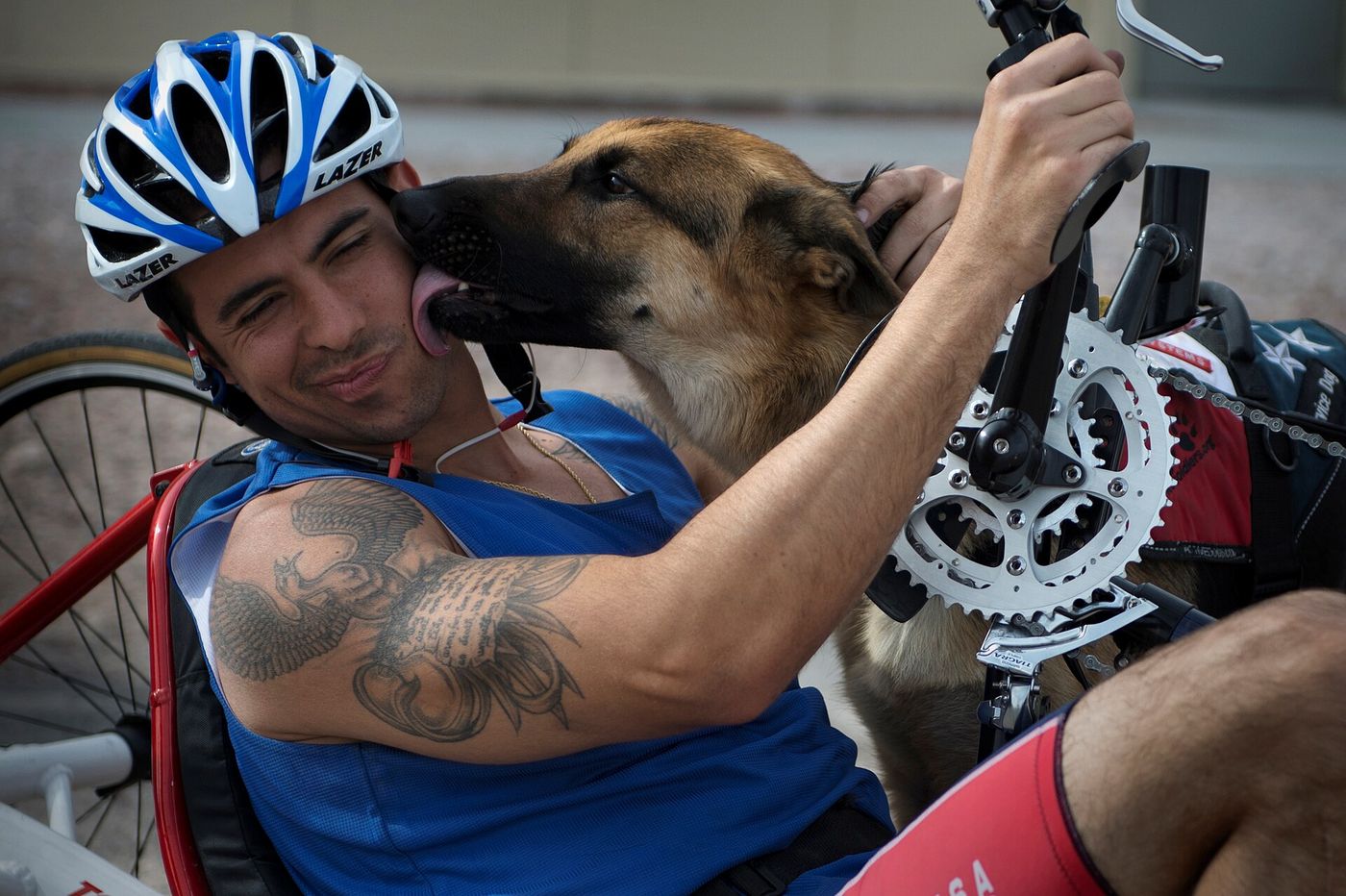
Where Virginia veterans can turn
- VA medical centers in Hampton, Richmond and Salem offer PTSD programs, plus community clinics statewide.
- Vet Centers provide confidential readjustment counseling, often without long waits.
- Virginia Veteran and Family Support, part of the Department of Veterans Services, connects veterans and families to behavioral health help.
- Veterans Crisis Line: dial 988 and press 1, or text 838255.
- The VA does not supply ESAs. Service dog programs for veterans with PTSD have been studied through federal pilot efforts such as the PAWS Act.
Housing Accommodations Beyond the Animal
The same fair housing rules that allow an assistance animal also let you ask for other reasonable changes connected to PTSD. A clinician's documentation can cover more than one request.
Away from a busy parking lot, dumpster area or ground-level windows that trigger hypervigilance.
Close to your entrance, which can reduce stress walking through dark lots at night.
Asking maintenance to schedule visits rather than arriving unexpectedly.
Virginia law gives survivors of certain crimes, including family abuse and sexual abuse, specific options to end a lease. Legal aid can explain eligibility.

A Trauma-Informed Evaluation, Stage by Stage
You set the pace. Nobody needs a detailed retelling of the worst day of your life to decide whether an animal helps you now.
Free Screening
Questions about sleep, startle, avoidance and mood. No narrative of the event is required.
Safety and Current Care
The clinician asks what support you already have and whether you feel safe right now.
Function, Not Details
The focus stays on how symptoms limit daily life and where an animal fits.
ESA or PSD Letter
If appropriate, you receive documentation matched to an ESA or a trained psychiatric service dog.
Virginia and Federal Protections for Trauma Survivors
In housing
- The Fair Housing Act and the Virginia Fair Housing Law cover PTSD when it rises to the level of a disability.
- Va. Code § 36-96.3:1 addresses assistance animals, including emotional support animals, in dwellings.
- Landlords may verify documentation but should not require trauma details or treatment records.
In public places
- The ADA lets trained service dogs, including psychiatric service dogs, accompany handlers in businesses open to the public.
- Staff may ask only whether the dog is required because of a disability and what task it has been trained to perform.
- Virginia's disability rights law, Va. Code § 51.5-44, also protects the use of service dogs in public places.
ESA and PSD Evaluation Plans
Live pricing from checkout, including options for psychiatric service dog documentation. The Free Screening comes first and costs nothing.
PTSD Assistance Animal Questions
Continue With These Virginia Guides
Educational information about PTSD and assistance animals, not medical or legal advice. Program availability and laws change; confirm with the VA, a Virginia attorney or the agency involved.
Talk to Someone Who Understands Trauma
Begin with a private, no-cost screening. A Virginia-licensed clinician will only move forward with you if an ESA or psychiatric service dog letter is the right fit.