
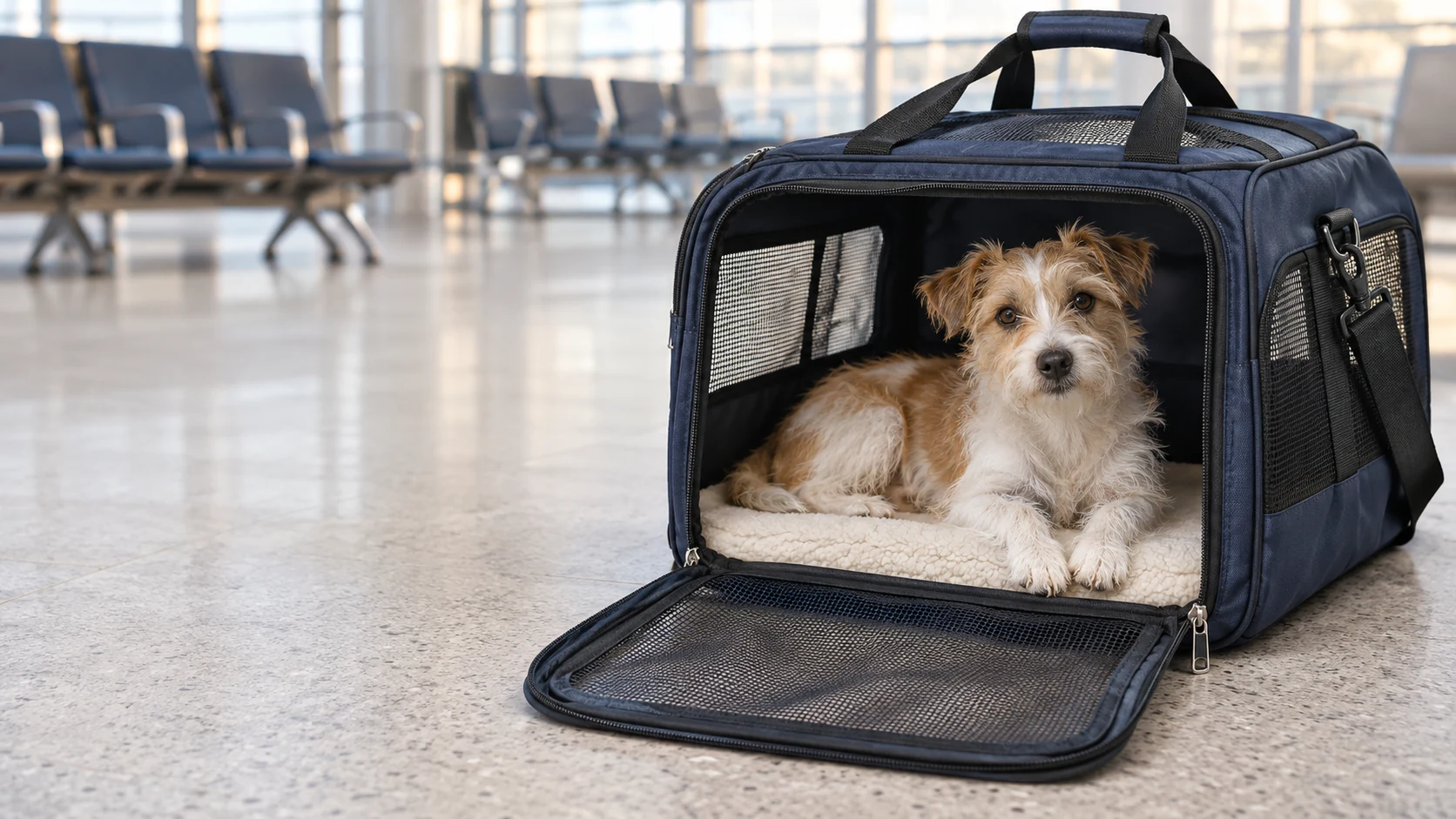
A successful JetBlue pet trip begins before you choose a seat or buy a carrier. American Service Animals (ASA) walks through the practical decisions that matter: whether your pet fits comfortably, how a second pet changes the booking, and when the airline's separate trained service-dog process applies.
Start with the animal and the complete itinerary, then compare the ticket and extra costs. One important point needs direct confirmation: JetBlue's pet webpage and its current contract give different information about the number of pets a passenger may bring.
Can your pet travel comfortably in JetBlue cabins?
JetBlue's ordinary-pet option is for small cats and dogs in an under-seat carrier. Its pet travel page does not offer that option for large dogs. This is a pet rule; do not apply it automatically to a qualified service dog.
Think of two separate checks. The bag must work in the aircraft, and the animal must be comfortable inside the bag when it is closed. Passing one does not establish the other. Check the actual pet rather than relying on its breed name, a seller's size category or a photograph of another animal using the carrier.
Before buying a nonrefundable arrangement, write down the animal's species, the carrier's measurements and every flight in both directions. If a carrier that meets the airline's limits cannot comfortably accommodate your pet, pause the booking and consider another travel plan. A smaller bag is not a solution to an animal that does not fit.
One pet versus two: reservations, seats and budget
Confirm a two-pet trip directly with JetBlue before paying. The pet webpage describes two pets per traveler, separate carriers, and a second seat and pet fee. However, section 10(d) of the Contract of Carriage, revised November 3, 2026, still limits a passenger to one pet. These published instructions are inconsistent; purchasing an extra seat by itself does not resolve the issue.
Ask JetBlue to confirm the permitted arrangement for your specific flights and document the answer in the reservation. If two pets are accepted, request a complete quote covering the second passenger seat, each animal's charge and both directions of travel. Do not assume that a pet fee covers another animal or that an empty adjacent seat is available for your use.
For any pet booking, obtain the current pet-fee quote before checkout. JetBlue's flight terms treat pet transport as a separately charged service. Budget for the passenger fare, any paid seat choice, luggage and pet charge together. The purchase price of a carrier is a different expense from transporting the animal.
Carrier measurements, comfort and airport handling
The published carrier maximum is 17 inches long by 12.5 inches wide by 8.5 inches high. JetBlue accepts hard or soft carriers with secure containment, ventilation and a leakproof base. The animal needs room to stand and turn comfortably. Check these points against the current carrier specifications.
Measure the outside of the bag, then inspect its interior with the intended bedding in place. Check zippers, seams, mesh and the opening. A useful home rehearsal includes placing the carrier down, picking it up carefully and returning it to the floor while watching whether the base stays stable. Stop if the arrangement is unsuitable rather than treating the journey as a test run.
Keep a leash available for screening; the TSA travel checklist specifically reminds pet travelers to bring one so the carrier can be screened. Follow the officers' instructions. Build time for the airline counter and a relief stop into your arrival plan, and keep reservation details accessible without unpacking your main bag.
Seat restrictions and onboard carrier placement
Ordinary pets cannot use Mint, bulkhead, emergency-exit or other seats restricted for under-seat storage. The animal stays in its carrier. JetBlue requires under-seat placement for taxi, takeoff and landing; its pet page describes limited carrier-on-lap or purchased-seat options during the flight. Confirm your arrangement with the crew rather than assuming an extra seat changes the containment rules.
JetBlue's current fare guidance identifies an approved pet carrier as the personal item and allows a carry-on bag. Pack accordingly: a handbag or laptop case should not become an unplanned extra item. Recheck the booking-specific allowance if another airline operates a segment.
When choosing a seat, prioritize a workable carrier location over proximity to the front. If you change flights, revisit the seat, pet acceptance and charges together. Keeping screenshots of the confirmed booking and your carrier measurements can make that conversation easier, although those records do not override the airline's requirements.
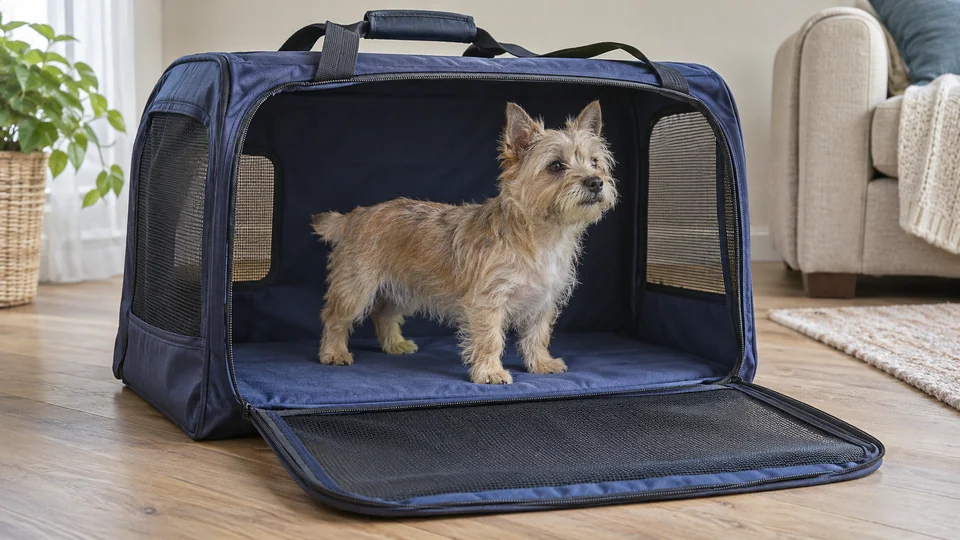
Original ASA editorial illustration of checking comfort at home; the pictured carrier is not evidence of compliance with a specific airline's dimensions.
Destination paperwork and operating-carrier checks
Read the route restrictions before arranging veterinary paperwork. JetBlue's current contract excludes ordinary pets on flights to or from the United Kingdom and European Union and describes other destination restrictions. A country's willingness to admit an animal does not mean your airline will carry it there.
For an otherwise eligible trip, use USDA APHIS pet-travel guidance to begin checking entry requirements. APHIS recommends contacting an accredited veterinarian early for international preparation. Arrange the return journey at the same time; requirements for a dog entering the United States are a separate check from departure requirements.
On a mixed-airline itinerary, ask each operating carrier about animal acceptance and how the pet reservation is recorded. Do not treat a JetBlue flight number, one confirmation email or a through ticket as confirmation for the animal on every segment. Put each carrier's response next to the relevant flight in your itinerary. If comparing domestic alternatives, use a route-based Southwest comparison rather than comparing pet fees alone.
Where ESAs and trained service dogs fit on JetBlue
JetBlue's service-animal process applies to dogs trained to perform disability-related work or tasks. It requires advance notification and DOT paperwork, generally at least 48 hours before departure. The airline describes an airport process for bookings made within that window; contact it promptly rather than assuming a last-minute request will be straightforward.
An emotional support letter does not establish task training or change a pet into a service dog. Read what ESA status means for flying and the guide to DOT service-dog documentation rules before choosing a booking category. Our ASA answers about emotional support and task training provide general assessment context.
You can request an individual assessment through ASA where available. A professional determines whether clinical documentation is appropriate; intake does not guarantee a letter, training, airline approval or a pet-fee exemption.

Find out if an ESA letter is right for you
A few guided questions. Your personal details come last.
Use our contact page to ask ASA about your assessment records. JetBlue remains the contact for flight availability, pet charges and the conflicting two-pet instructions.
JetBlue pet travel questions
Can I book two pets for one JetBlue trip?
Get confirmation before purchasing. The pet webpage describes a two-pet arrangement, while the November 3, 2026 contract says one pet per passenger. Ask JetBlue to resolve that conflict for your flights and record the accepted arrangement before buying an additional seat.
What carrier measurements should I check for JetBlue?
Check all three exterior dimensions against the limits above, then assess the space your animal actually has inside. Include bedding in that check. Passing the size measurement is not enough if the pet cannot move comfortably in the closed carrier.
Which JetBlue seats are unavailable to travelers with pets?
Use the seat exclusions in the carrier-placement section when reviewing your seat map. Do not choose a premium or front-row location merely because it looks spacious. Ask JetBlue to identify a suitable location for the particular flight before committing to a paid seat.
Does a JetBlue pet carrier replace another cabin bag?
Yes. Current fare guidance treats the approved carrier as your personal item, with a carry-on also permitted. Plan where your wallet, documents and small electronics will go so you do not arrive with an additional bag beyond the applicable allowance.
What changes when a JetBlue itinerary includes another operating airline?
That airline needs to confirm its own acceptance and reservation process. Verify every segment before purchasing, including the return. A single booking reference is useful for managing the trip but should not be treated as automatic animal approval across carriers.
Will an ESA letter remove JetBlue pet fees or carrier rules?
No. Emotional support documentation alone does not establish eligibility for the trained service-dog process. Choose the correct animal category first, then complete the airline's requirements. An assessment should address your individual clinical needs, not be purchased as a way around a travel charge.
