The Task-Trained Service Dog
Individually trained to perform tasks directly related to its handler's disability.

Our free online screening comes first. If you go ahead, a clinician licensed in Colorado evaluates you and, when the evidence supports it, writes the ESA letter or psychiatric service dog letter your situation calls for. Below, how the three categories differ under Colorado and federal law.
Three categories at a glance
The screening costs nothing and helps you see which category your animal fits before you choose a plan.
Tell us what your animal does for you, whether it is trained for tasks, and where you live in Colorado.
Colorado requires psychologists, counselors, social workers, therapists and nurses to meet you in person before a housing finding; physicians may use telemedicine.
If the clinician supports a letter, you will find it in your account. If not, the clinician tells you why, and you may ask for a refund under the policy.
Pricing
Compare the current evaluation fees, read live from our checkout. There is no charge for the Colorado screening. The plan is paid at checkout ahead of the evaluation; should the Colorado-licensed clinician decline to support a letter, you can request a refund within 30 days of purchase. Questions? Read our FAQ page or contact us.
Clinical review for one emotional support animal and a Colorado housing letter.
$149.00/ one-time
One evaluation covering the support provided by each of your animals in a Colorado home.
$159.00/ one-time
A psychiatric service dog evaluation with a clinician licensed in Colorado.
$199.00/ one-time
Compare the combined letter and document options.
An ESA letter and certificate together in one document package.
$199.00/ one-time
A PSD letter, certificate and ID card in one package.
$225.00/ one-time
Need help choosing? Take the free screening first or compare every plan. Documentation depends on clinical approval; optional certificates and cards do not establish access rights.
The screening sorts out whether you are describing a service dog, an ESA or neither before any plan is chosen.
Colorado asks a licensee for a written finding on disability and need, and our clinicians write to that standard.
We do not sell registrations; a letter exists only when a licensed clinician supports it.
Prices are listed above; if the clinician cannot support a letter, the refund policy applies.
“Service animal” gets used loosely for any animal that helps a person. Colorado and federal law use it narrowly. Getting the category right determines where your animal can go, what a landlord or business may ask, and what you risk by claiming the wrong one.
Individually trained to perform tasks directly related to its handler's disability.
Benefits a person with a disability through companionship, without task training.
Visits hospitals, schools and care settings to provide comfort to many people.
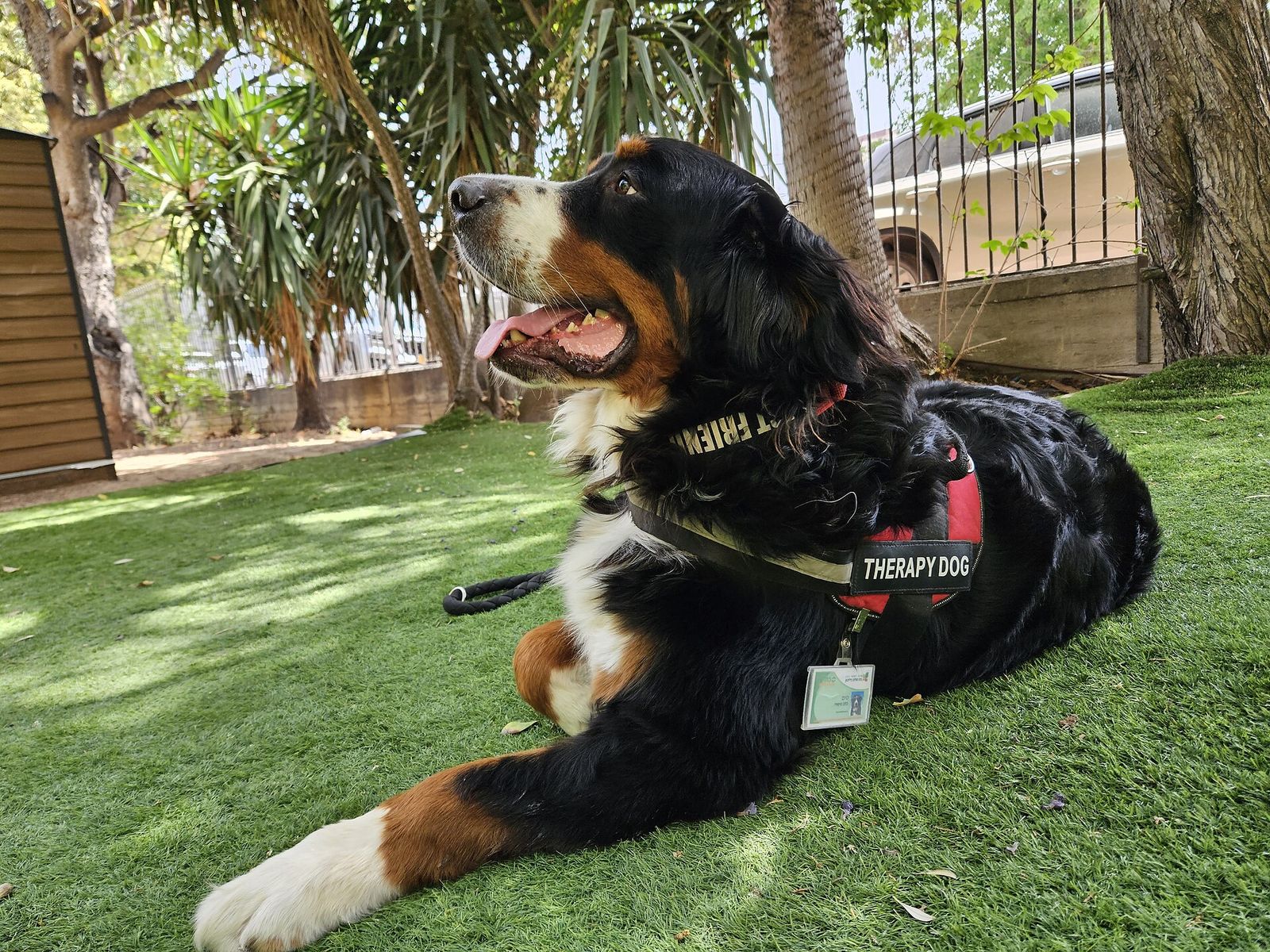
The service dog category is broad. What unites its members is task training, not the type of disability.
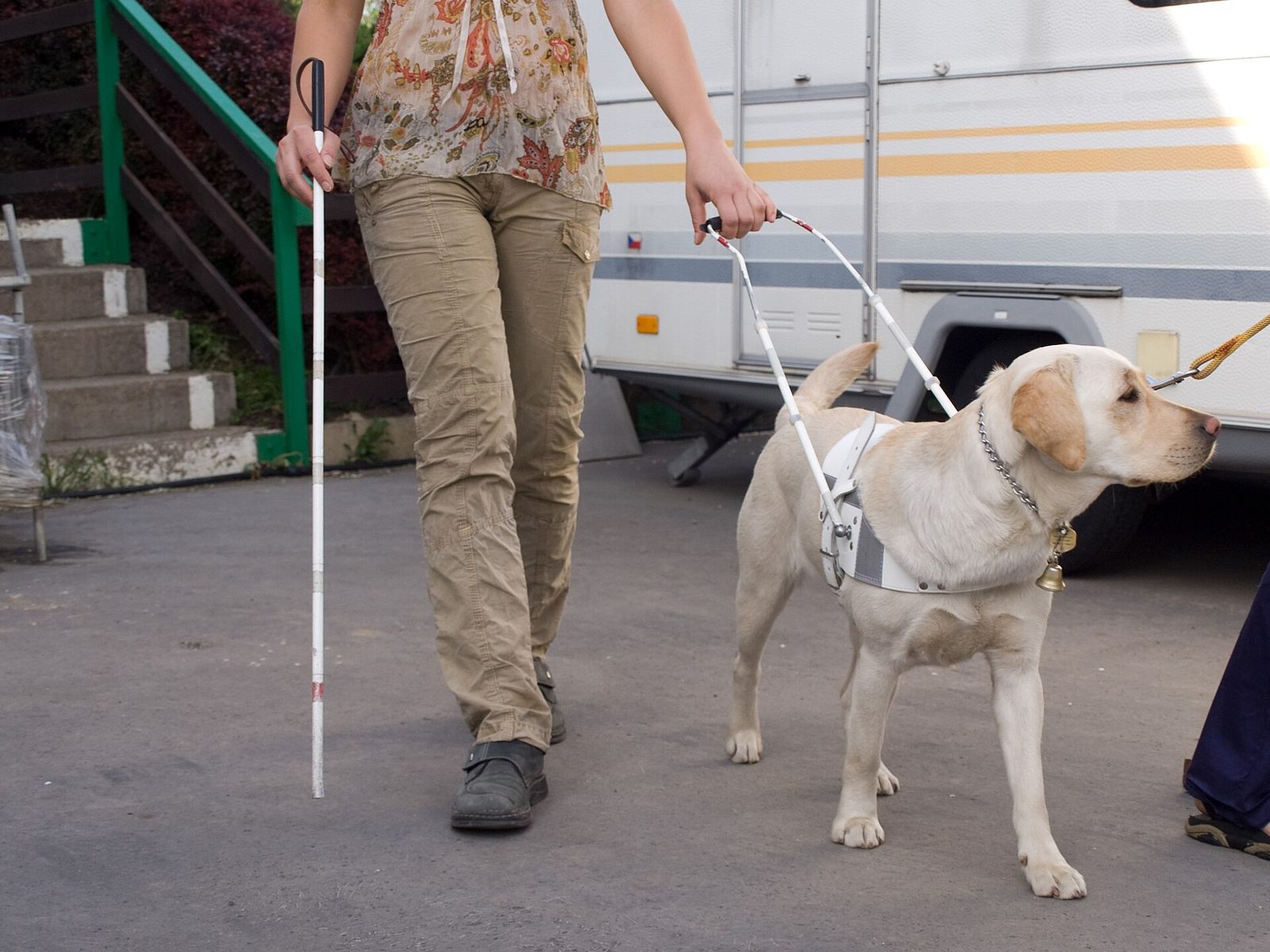
Navigation for people who are blind or have low vision.
Alerting to sounds such as alarms and doorbells.
Retrieving items, opening doors and bracing.
Signalling seizures or blood sugar changes.
Tasks for mental health conditions. See our PSD guide.
Read across each setting to see which categories are covered. Labels with a ban sign have no special right in that setting.
Both service dogs and ESAs are assistance animals for housing purposes.
Public access under the ADA belongs to trained service dogs.
ESAs lost airline accommodation in 2021. See below.
Colorado law lets an employee keep a trained service animal at work; an ESA is an accommodation request decided case by case.
Campus residences follow housing rules. See college students.
Therapy animals attend because the facility invites them, not by right.
Denver International is one of the busiest airports in the country, and this is where many Colorado residents first discover the categories are not interchangeable.

Under the US Department of Transportation's revised rule, an airline may handle an emotional support animal as an ordinary pet under its own pet policy, including fees and carrier requirements.
Employment is its own legal framework, and it treats assistance animals differently from housing or public access.
The main provisions a Colorado resident is likely to encounter.
| 42 U.S.C. § 12101 et seq. | Americans with Disabilities Act. Defines service animals for public accommodations and limits what businesses may ask. |
|---|---|
| 42 U.S.C. § 3604(f) | Fair Housing Act. Reasonable accommodation in housing, covering both service dogs and emotional support animals. Since May 2026 HUD no longer presumes untrained-ESA requests reasonable, so Colorado's own law now carries ESA requests. |
| C.R.S. §§ 24-34-301, -502, -502.2 | Colorado Anti-Discrimination Act, as amended by HB26-1045. Since August 12, 2026, assistance animals, ESAs included, are covered in housing; a complete ban is presumed discriminatory. |
| C.R.S. § 24-34-803 | Rights of individuals with service animals. No extra charge for a trained service animal, a right to keep it at work, liability for damage, and no state or local licensing fees. |
| C.R.S. § 24-34-804 | Service animals. Denying those rights, or interfering with or harming a service animal, is unlawful, with treble damages for willful harm. |
| C.R.S. § 18-13-107.3 | Misrepresentation. Penalties for knowingly claiming an entitlement to an assistance animal you do not have: a civil infraction after a prior warning, $25 the first time, $50 to $200 the second and $100 to $500 after that. |
| C.R.S. § 12-245-229 and § 12-240-144 | Who may write the finding. A licensee must make a written finding on disability and need, and may decide only after meeting you in person; physicians may meet by telemedicine. |
| 14 C.F.R. Part 382 | Air Carrier Access Act rules. The DOT framework under which ESAs are no longer accommodated by airlines. |
Each category proves itself differently, and none of them uses a registry.
Businesses cannot demand papers. The two permitted questions are whether a disability requires the dog and which task it has learned. Airlines may ask for the DOT forms.
Unless the need is obvious, a Colorado housing provider can request reasonable documentation of the disability or the need, and a licensee's written finding answers that request.
Therapy work is usually arranged through a therapy animal organisation and the facilities you visit.
A written finding from a Colorado licensee is also an affirmative defense if someone accuses you of misrepresenting an assistance animal.
A starting point for each situation. It is orientation, not a clinical or legal determination.
For example interrupting an episode or retrieving medication on cue.
This sounds closest to a service dog. Task training is the defining feature, and it brings public access rights in addition to housing protection. Our psychiatric service dog guide covers the training path.
Companionship and routine make a real difference to my daily functioning.
This sounds closest to an emotional support animal. ESAs are protected in housing through a reasonable accommodation, supported by a clinician's documentation. The free screening is the natural next step.
The goal is comforting other people rather than supporting myself.
This sounds closest to a therapy animal. Therapy work is usually arranged through a therapy animal organisation and the facilities you visit. It is not an assistance animal for you, so it carries no housing or public access rights.
Nine answers on how Colorado and federal law sort the three categories.
No. A service animal is individually trained to do tasks for someone with a disability; an emotional support animal provides benefit through companionship and is not task-trained. Both are protected in housing, but only service animals have general public access rights.
Since the US Department of Transportation's rule took effect in early 2021, airlines no longer have to accommodate emotional support animals. They may treat ESAs as pets under their own policies. Trained service dogs remain covered under DOT rules.
A therapy animal visits settings such as hospitals, schools and care homes to provide comfort to many people. It is not an assistance animal for its handler and has no special housing or public access rights of its own.
No. There is no mandatory service dog registration or certification in Colorado or under federal law. Service dog status comes from individual task training.
Under ADA rules, miniature horses that are individually trained can qualify in limited circumstances, subject to factors like size and whether a facility can accommodate them. Beyond that exception, the service animal category is limited to dogs.
Only through genuine task training. The same animal can make that transition, but documentation alone never does it.
Misrepresenting entitlement to an assistance animal has consequences under Colorado law. Presenting an untrained ESA as a service dog to gain public access is exactly the kind of claim that invites trouble.
No vest, harness or ID is legally required. Many handlers use one to reduce questions, but it confers no status.
None of them. See registration myths for why registries have no legal function.
Go deeper on the category that fits you.
Start with the free screening. A Colorado-licensed clinician looks at what your animal actually does for you and tells you which kind of letter, if any, matches it.