
KLM's animal-travel rules depend on the route and the animal's booking category. Ordinary pets, trained service dogs and emotional support dogs on eligible direct Canada flights follow different processes. American Service Animals (ASA) explains how to identify the right path, prepare useful questions and avoid relying on an ESA letter for a journey it does not cover.
KLM animal travel: U.S., Canada or another route?
Write down each operating airline, airport and travel class on your itinerary. A KLM ticket may include a partner-operated flight, while a connection can introduce a different country's requirements. Ask which rules apply to each segment instead of asking only whether KLM accepts emotional support animals.
For flights involving the United States, start with the distinction between an ordinary pet and a qualifying task-trained service dog. For a direct KLM flight to or from Canada, check the airline's separate emotional support dog process. For other routes, request the applicable pet or service-dog requirements directly from KLM.
This is why emotional support travel depends on the itinerary. A document accepted for one journey does not automatically authorize another. If the terminology is unfamiliar, ASA's ESA and PSD terms for international planning can help you prepare questions about assessment; airline eligibility remains a separate decision.
Pet acceptance and restrictions by travel class
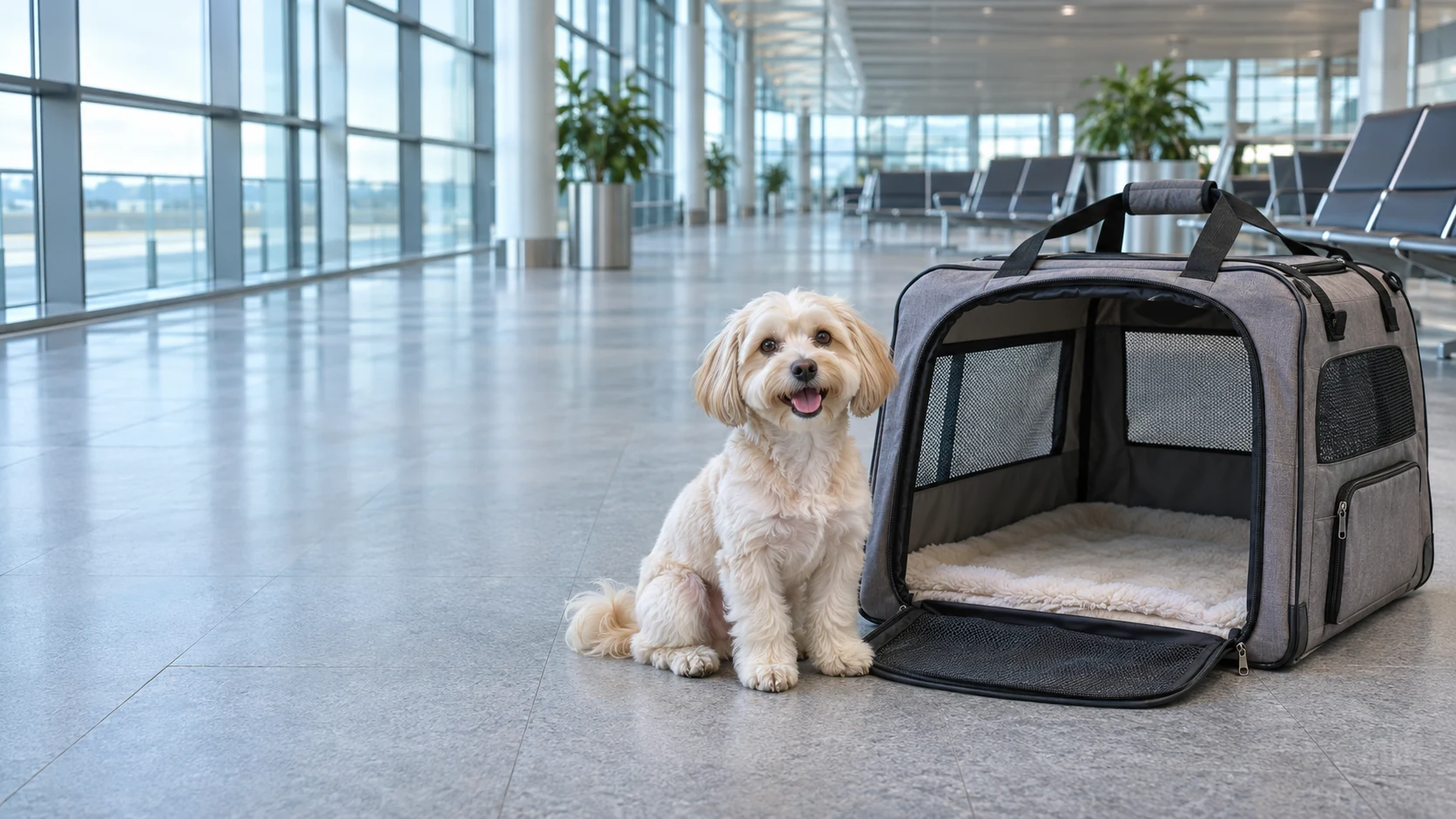
KLM's published pet-reservation policy lists cabin travel for one cat or dog in Economy, or in Business within Europe. It excludes ordinary pets from Premium Comfort and intercontinental Business cabins. The listed cabin carrier maximum is 46 × 28 × 24 cm, with the pet and carrier together weighing no more than 8 kg. The animal must fit comfortably inside and remain contained during the flight. Reconfirm these specifications against your actual aircraft and booking.
Measure the carrier's exterior and weigh it with the dog inside. Then assess the dog's usable space, not just the bag's label. A carrier that is technically within a size limit can still be unsuitable for the animal. Before purchasing one, send KLM its exact measurements and ask how the carrier fits the proposed seat.
Keep the cabin decision connected to the animal reservation. An upgrade that seems attractive for you can be incompatible with ordinary pet travel. Ask what happens to the animal arrangement if your seat, aircraft or itinerary changes, and save that answer with the booking.
Direct Canada flights and the separate emotional support dog process
KLM's Canada service-dog information describes an emotional support dog process only for direct flights to and from Canadian destinations. For cabin travel, the dog must remain in an approved under-seat carrier. This is not permission for an unrestricted large dog to occupy cabin floor space.
KLM asks for submission at least 96 hours before departure: its behavior acknowledgement/request form, a medical or mental-health professional form, a veterinary form, and relevant entry, exit and transit documents. Obtain the current package from KLM and confirm the professional qualifications it requires. The airline's Canadian tariff also describes the direct KLM-operated Canada limitation and advance documentation.
Use a simple example to test your understanding: a direct Amsterdam–Canada journey needs one route review; an itinerary continuing to the United States needs an additional review of that segment. Do not assume the Canada arrangement continues across the border or transfers to another operating airline.
Before beginning an assessment for this purpose, obtain KLM's written instructions. American Service Animals (ASA) cannot promise that a particular clinician is authorized for every foreign-airline form or that a general letter will satisfy this process.

Find out if an ESA letter is right for you
A few guided questions. Your personal details come last.
U.S. service-dog forms and dog-entry requirements
KLM's U.S. service-dog instructions direct travelers to the DOT documentation process. They distinguish advance bookings from reservations made less than 48 hours before departure and allow the latter's forms to be presented at check-in or the gate. Confirm the required forms and submission method with KLM CARES; the Canada emotional support dog paperwork is a different process.
The federal framework permits the DOT Air Transportation Form and, for a flight segment scheduled for eight hours or longer, the relief attestation. Read the U.S. service-dog air-travel framework for the distinction between required airline procedures and clinical documentation. A psychiatric service dog qualifies through applicable disability-related task training, not through a purchased registration.
Entry into the United States is another step. The CDC bases dog-entry requirements on vaccination location and the countries the dog has visited during the previous six months. Work through the appropriate CDC pathway with your veterinarian. Include the return journey in your planning even if your dog normally lives in the United States.
 Keep airline, clinical and veterinary paperwork organized by purpose. Illustrative image; the blank papers are not airline forms.
When hold transport needs separate confirmation
A dog that cannot travel in a cabin carrier does not automatically have an approved hold arrangement. KLM publishes separate hold criteria and restrictions involving the aircraft, connection and destination. Ask it to check the complete itinerary and animal details before treating this as an alternative.
Give the airline the dog's breed, age, weight, proposed kennel measurements and travel dates. Ask which transport service is being offered, where the dog is accepted and collected, how connections are handled, and what happens if a flight changes. Request an itemized current quote rather than relying on a fee from an older article.
Review KLM's preparation guidance and the applicable checklist with your veterinarian. KLM uses checks covering the animal, kennel and documents. Discuss fitness to travel and any medication questions with the veterinarian; do not treat sedation as a shortcut around an unsuitable arrangement.
If the airline cannot confirm a suitable option, compare a different route, date or form of travel. Booking your own seat does not resolve the animal's transport. Keep a backup plan until both arrangements are confirmed.
Pet space, documents and questions to resolve before payment
KLM's pet page asks travelers to reserve at least 48 hours before departure and explains that animal space is limited. Begin earlier when a destination or professional form requires preparation. The Canada ESD process has its separate 96-hour submission requirement; do not substitute the ordinary pet deadline for it.
- Confirm the category: pet, qualifying service dog or the eligible direct-Canada emotional support dog process.
- Confirm every segment: operating airline, route, cabin, connection and return journey.
- Confirm the animal arrangement: actual space, carrier or kennel acceptance, and how confirmation appears in the reservation.
- Confirm documents: current forms, qualified signers, submission deadlines and entry requirements.
- Confirm the practical details: quoted charges, check-in location, arrival instructions and options after a schedule change.
For an international trip beginning in the United States, USDA APHIS recommends early veterinary preparation for the destination's requirements. Make a calendar that includes appointment dates, document preparation, airline submission and final confirmation.
You can check whether an ASA assessment fits your needs where an appropriately authorized clinician is available. Confirm any airline-specific professional requirements first. For existing records, ask ASA about documentation it has issued. KLM decides the booking process; an assessment does not guarantee documentation or airline acceptance.
Common KLM pet and emotional support dog questions
Does KLM have a separate emotional support dog process for direct Canada flights?
Yes. Its published Canada information describes a route-specific process with an under-seat carrier and advance supporting documents. Obtain the current forms and confirmation from KLM before relying on it for your journey.
Does KLM apply its Canada ESD process to U.S. flights?
Do not apply the Canada exception to a U.S. segment. Check the U.S. pet or qualifying service-dog process separately, including when that segment follows a flight to Canada.
Can an ordinary pet travel in every KLM cabin?
No. Cabin eligibility depends on the travel class and route, and the animal must meet the carrier requirements. Confirm the specific cabin before buying or upgrading a ticket.
Which forms apply to a service dog on a KLM flight involving the United States?
Use KLM's U.S. instructions for the applicable DOT service-animal forms, including the long-flight relief requirement where it applies. Check submission timing with KLM CARES and prepare any separate animal-entry documents.
Is pet travel in the hold available on every KLM route?
No. It requires a separate eligibility and reservation check. Give KLM the complete itinerary, dog details and kennel measurements, and ask it to confirm the proposed arrangement in writing.
Can ASA complete all documentation KLM requests for Canada?
No universal promise is possible. KLM requests documents from different sources, including a veterinarian. Confirm the current professional requirements and whether an appropriately authorized clinician can assist; ASA does not guarantee completion of every airline form or acceptance.
