
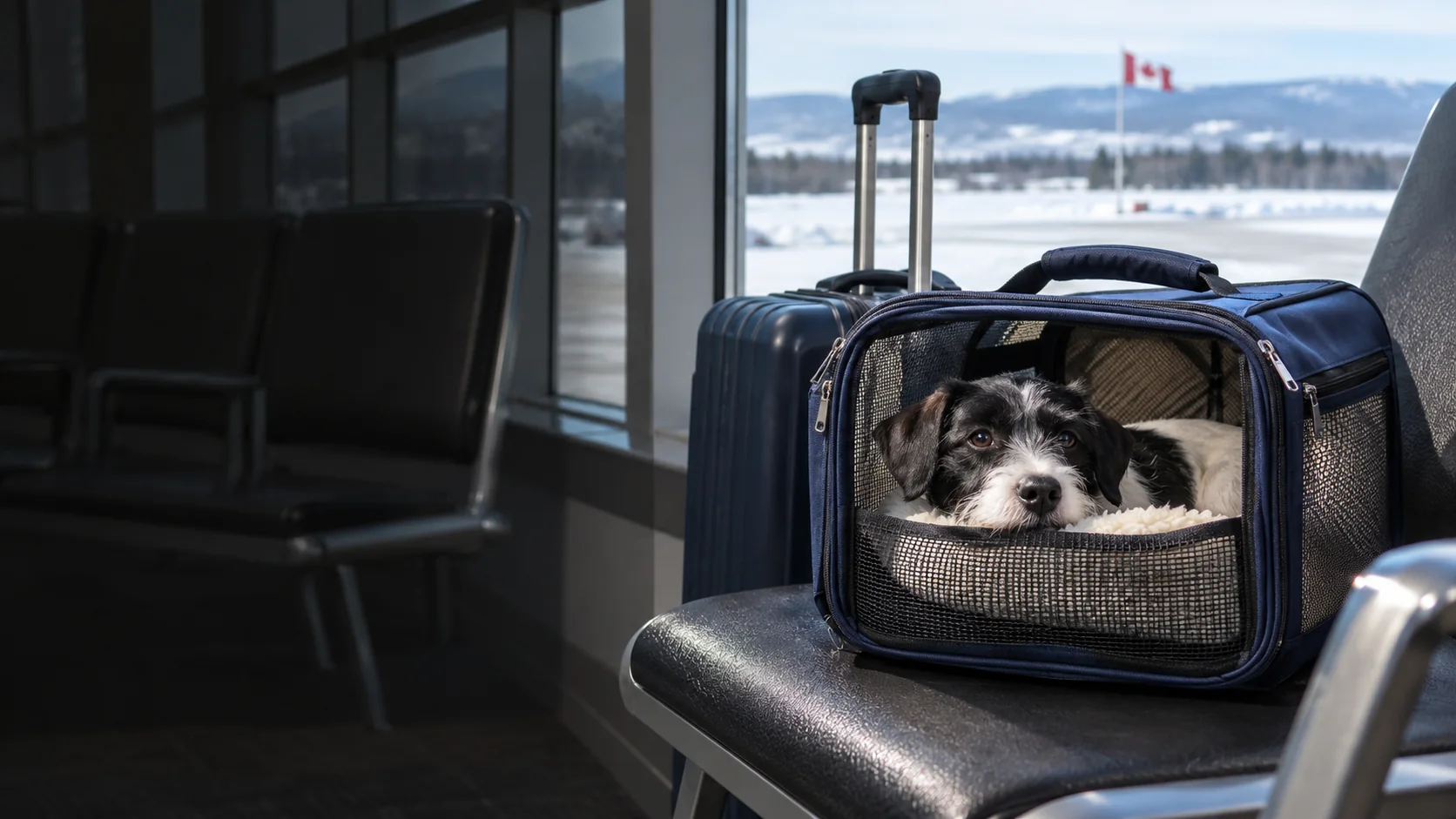
Air Canada's emotional support animal policy cannot accurately be summarized as either “all ESAs fly freely” or “emotional support dogs are never accepted.” The airline publishes a specific emotional support dog process, alongside separate processes for trained service dogs and ordinary pets. Choosing the correct one is the first travel decision.
The emotional support route is designed around a dog that can remain comfortably in an approved under-seat carrier. It involves advance documentation and airline review. An ESA letter by itself does not reserve space, settle an international entry requirement or turn a larger dog into an under-seat passenger.
Use this American Service Animals guide to prepare questions for Air Canada's Accessibility Services team before buying a nonrefundable itinerary. It emphasizes the operating carrier, your dog's actual needs and the documents for the selected route. For the wider U.S. framework, our Air Carrier Access Act guide provides a separate explanation.
Choose between emotional support, service dog and pet travel
Start by describing the dog's role truthfully. A trained service dog performs disability-related work; an emotional support dog provides support through its presence; a pet travels through the airline's pet service. Those categories can lead to different documentation and cabin arrangements even when the same species is involved.
Air Canada's domestic tariff, Rule 55(F), provides for one emotional support dog on flights operated by Air Canada, Air Canada Express and Air Canada Rouge, subject to its conditions. The domestic tariff is evidence for domestic carriage, not a promise that every international partner flight follows identical rules. Ask about every operating airline on a connecting reservation.
The Canadian Transportation Agency's explanation of its ESA decision also distinguishes emotional support dogs from task-trained service dogs and describes accommodation under specified conditions. That Canadian framework should not be confused with the U.S. rule that airlines need not recognize ESAs as service animals.
Write down the purpose of the request before contacting the airline. “I need to ask about your emotional support dog process for this specific flight” is clearer than asking whether a dog is “certified.” If the dog has trained tasks, explain that and request the service-dog requirements instead. Never select the service category solely to avoid a carrier limit or a pet fee.
Assess the dog, carrier and aircraft together
The airline's published emotional support dog guidance says the dog must travel safely and comfortably in an approved carrier beneath the seat and remain inside it throughout the journey. Rule 55(F) also requires the dog to be at least ten weeks old and fully weaned. The fit question is about the animal inside the carrier, not merely whether an empty bag can be compressed into the available space.
Measure the dog and the carrier independently. Then ask the airline which carrier limits apply to the aircraft and seating arrangement on your booking. Do not treat a dimension quoted for a different aircraft or an old travel report as an approval. Seat hardware, cabin layout and aircraft substitutions can affect usable space.
Practice with the actual carrier well before travel. Observe whether the dog can rest naturally and whether closing it causes sustained distress. A bag that technically fits the seat area may still be unsuitable for the animal. Discuss health or behavioral concerns with the appropriate veterinary professional; buying a smaller carrier does not solve a poor fit.
If the dog cannot meet the cabin arrangement, ask about available alternatives and their requirements before committing to the trip. A baggage-compartment option, where offered, is a distinct travel decision with health, aircraft and route considerations. It should not be treated as an automatic or harmless substitute for an expected cabin booking.
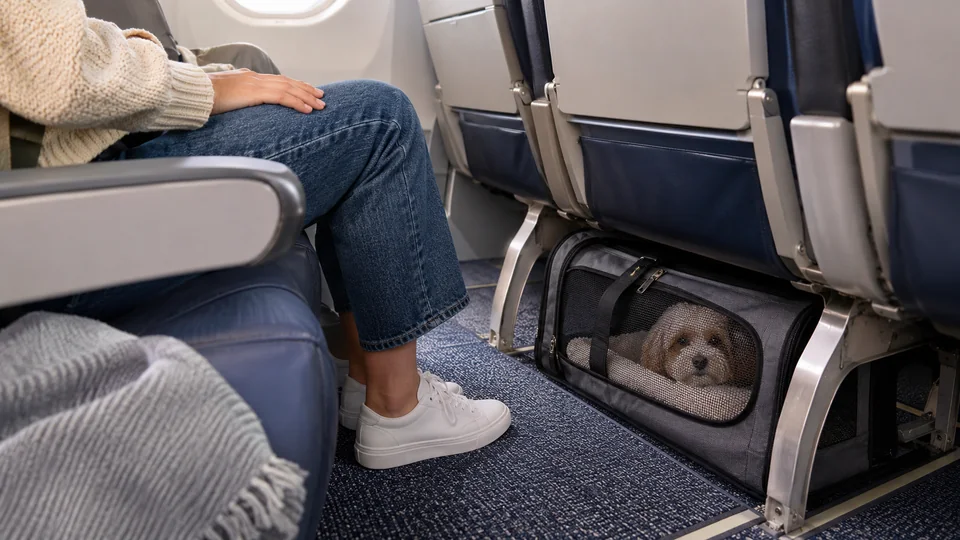 Check the animal's comfort and the carrier's aircraft fit as separate questions.
Prepare the three emotional support dog forms
Air Canada's Acknowledgement and Confirmation of Behaviour form instructs travelers to submit three forms at least 96 hours before travel: the passenger's acknowledgement, the medical or mental-health professional form, and the veterinary health form. It also instructs travelers to retain the completed originals while traveling.
These documents answer different questions. The passenger addresses behavior and responsibilities; a licensed professional addresses the relevant clinical need; the veterinarian addresses the identified dog's health. Completing one part does not authorize another person to sign the remaining parts, and an older general-purpose letter is not automatically interchangeable with the airline's requested form.
The domestic tariff gives validity windows for these submissions: the acknowledgement and professional form are dated within one year of the start of travel, and the veterinary form within two months unless local law requires a shorter period. Confirm the current instructions for your itinerary, especially if you are combining travel dates or returning after an extended stay.
Create a document checklist with the form name, responsible signer, appointment date, signature date and submission status. Check that the passenger and dog identifiers agree across all forms. If a professional needs more information or decides they cannot support the request, resolve that before the flight rather than editing an issued document yourself.
Submitting forms is not the same as receiving confirmation. Ask how the request is recorded on the reservation, whether anything remains outstanding, and how to provide corrections securely. Keep the response with the itinerary so that a later schedule change does not separate the approved request from the flight details.
Check connections, borders and the return journey
A ticket sold by Air Canada may include a flight operated by another airline. Write each segment on its own line with the operating carrier, departure and arrival airports, date and cabin. Ask whether the animal's approved travel category and arrangements apply to that segment. A single booking reference does not eliminate operator differences.
Destination animal-entry requirements are also separate from airline acceptance. Review the official veterinary or border authority for each country involved, including transit rules where applicable. Ask your veterinarian about the required sequence and validity of health documents. A last-minute health certificate cannot always repair an earlier missing step.
For travel involving the United States, the U.S. Department of Transportation service-animal page explains that emotional support animals are outside the service-animal definition. Do not infer that a Canadian accommodation or an airline's voluntary policy changes the U.S. legal definition. Ask Air Canada how it will handle your exact flight rather than relying on a general statement about a country.
Plan the return before departure. The dog may need different documentation after time abroad, and the return flight may use a different aircraft. Keep an accessible copy of confirmation and official requirements, but bring originals where required. If a connection is disrupted, have the airline reassess the animal arrangements on the replacement itinerary rather than assuming that every alternate carrier can accept them.
What an ESA evaluation can contribute
A clinical evaluation concerns the person's circumstances and whether a professional can appropriately document a disability-related need. It is separate from an airline's carrier assessment, a veterinarian's travel-health review and a trainer's assessment of a dog's skills.
Before an appointment, provide the actual airline form and explain the intended travel. The professional needs to understand what they are being asked to attest to. Avoid requesting a generic promise that the dog will be admitted everywhere or asking someone to certify animal behavior they have not observed. Accurate limits make documentation more useful.
American Service Animals offers a pathway to an individual evaluation where the selected service is available. You can review how ASA ESA evaluations and letters work and contact ASA about service availability before beginning. Professional judgment determines whether documentation is appropriate; airline acceptance remains a separate decision.

Find out if an ESA letter is right for you
A few guided questions. Your personal details come last.
If you already have a treating professional, ask whether they can address the airline's particular questions within their scope. Confirm that any telehealth professional is authorized to serve you where you are located. Do not wait until the evening before travel to discover that an appointment, additional assessment or correction is needed.
 Keep clinical, veterinary and airline confirmations organized by their separate purposes.
Turn confirmation into a workable travel-day plan
Once the airline confirms the arrangement, build a practical schedule around the dog's needs and the required check-in process. Rule 55(F) directs ESA travelers to check in one hour before the normal check-in deadline; ask the airline what that means at your departure airport. A deadline is different from a recommended arrival time, and security or border queues may add more time.
Pack cleanup supplies, appropriate food and water arrangements, the dog's routine items and the documents required for the journey. Find the airport's animal-relief locations before travel. Consider how you will manage a delay without removing an animal from a carrier where the airline requires it to remain inside.
Have a fallback decision ready. If the request is incomplete or the dog does not meet the travel conditions, ask about lawful alternatives and the fare rules that apply. Do not assume an airport employee can waive a missing document, a country-entry requirement or an unsuitable carrier merely because you have arrived early.
Finally, review any changed flight information against your original checklist. The useful question is whether this dog, in this travel category, with these documents and this carrier, is accepted on the current itinerary. That is a more reliable basis for planning than the broad claim that an airline either always or never accepts emotional support animals.
Air Canada emotional support dog questions
Does Air Canada still have an emotional support dog process?
Yes. Its published guidance and current domestic tariff describe a specific process for emotional support dogs, including advance forms and carrier requirements. That does not establish acceptance on every partner or international flight. Confirm the operating carrier and the conditions for the particular itinerary before making plans around that accommodation.
Is an ESA letter enough to book the dog?
No. The airline requests an acknowledgement form, a medical or mental-health professional form and a veterinary health form, submitted in advance. A letter does not replace the animal reservation or confirm that the carrier fits. Ask the accessibility team to identify any missing steps and confirm the request's status.
How far ahead should I submit the forms?
The published forms specify at least 96 hours before travel. Build in additional time for appointments and corrections. The tariff discusses reasonable efforts for later requests, but that is not a guarantee of acceptance, and the form warns that late submissions may result in refusal at the airport.
Can a large emotional support dog sit at my feet?
The ESA cabin process requires the dog to fit comfortably inside a suitable under-seat carrier and remain there. A larger dog does not acquire the trained-service-dog seating arrangements by carrying an ESA letter. Discuss available alternatives with Air Canada and your veterinarian before purchasing travel that depends on cabin acceptance.
Are emotional support cats covered by this process?
Air Canada's emotional support animal process is limited to dogs. A cat may need to use the airline's separate pet-travel service if the itinerary and animal meet that service's conditions. Check the current pet rules, available space and required veterinary documents rather than submitting a dog-specific accommodation form.
Can ASA guarantee that Air Canada will approve my request?
American Service Animals cannot decide an airline's acceptance or a destination's entry requirements. An appropriate professional may assess clinical documentation needs, while the airline evaluates its own travel conditions. Keep those decisions separate and obtain itinerary-specific confirmation from Air Canada before relying on any proposed arrangement.
