
Free questions on your health and pet
The questions cover your health and the animal living with you, whether home is a Main Street apartment or a house near Lake Waubeeka.
Want an ESA letter Danbury landlords, condo associations or a campus housing office can verify on their own? Start with free screening questions, then meet a clinician licensed in Connecticut in a private video or phone session. That clinician judges which fits your situation: an emotional support animal at home, a psychiatric service dog, or neither. Every letter traces back to that evaluation, never to a registry sign-up.


A Danbury application moves in three steps, and only the first is free: you answer screening questions online, you pay for a plan at checkout and meet a Connecticut-licensed clinician live, and that clinician decides.
The questions cover your health and the animal living with you, whether home is a Main Street apartment or a house near Lake Waubeeka.
Choose your plan at checkout and book the live part. A guaranteed telehealth session, live by video or phone with the Connecticut-licensed clinician assigned to you, is included in every evaluation. Your clinician may add a second session, because nothing is written before the clinician knows you.
Your clinician either supports the request, and the signed letter lands in your account, or does not, and our refund policy takes over.
Every plan covers the same live evaluation and differs in the animals and papers involved. Whatever a search for ESA Danbury turns up, here the clinical evaluation comes first in every plan.
The ESA letter plan covers a single dog, cat or other animal that shares your Danbury home.
Under the multiple-pet plan one letter can list several animals, though only the ones your clinician supports, and a landlord can weigh each animal separately.
The PSD letter plan documents your disability and why you need a dog trained to perform tasks. The letter neither trains nor certifies the dog.
Two bundles exist for people who want extra documents: the ESA one includes a certificate, and the PSD one adds an ID card to its certificate. Neither grants access rights, both are optional, and neither stands in for the evaluation.
Current prices for each plan appear right below.
Pricing
Compare the current evaluation fees, read live from our checkout. Danbury residents answer the screening questions at no cost. Your plan is chosen and bought at checkout, ahead of the evaluation itself. Should the clinician find that you do not qualify, our refund policy returns everything you paid if you ask inside 30 days of purchase; it no longer applies after a letter has been issued and delivered. Questions? Read our FAQ page or contact us.
Clinical review for one emotional support animal and a Connecticut housing letter.
$149.00/ one-time
One evaluation covering the support provided by each of your animals in a Connecticut home.
$159.00/ one-time
A psychiatric service dog evaluation with a clinician licensed in Connecticut.
$199.00/ one-time
Compare the combined letter and document options.
An ESA letter and certificate together in one document package.
$199.00/ one-time
A PSD letter, certificate and ID card in one package.
$225.00/ one-time
Need help choosing? Take the free screening first or compare every plan. Documentation depends on clinical approval; optional certificates and cards do not establish access rights.
A Danbury ESA letter is worth handing over when a clinician licensed in Connecticut evaluated you live and signed it under that license, because setting aside a no-pet rule is your landlord's call and the request has to hold up. The same standard applies to every emotional support animal letter and PSD letter from us.
The signing clinician's name and Connecticut license appear on your letter, and a landlord can confirm that license through Connecticut eLicense.
Your clinician talks with you live, longer or in a second session when needed, and can conclude that a letter is not the right step for you.
This page gathers the Town Clerk, HART, the WCSU disability office and the right state complaint unit for Danbury. Your landlord still makes the decision.
There is no official Connecticut ESA registry, and being listed on any registry creates no legal right. Our optional certificate is paperwork without access rights, and so is our optional ID card.
Most Danbury rentals fall under Connecticut's accommodation rule; the two exceptions are a room inside the owner's own single-family home and a two-family house where the owner occupies the second unit.

Connecticut's housing discrimination statute, Section 46a-64c, makes it discriminatory to refuse a reasonable accommodation that a disabled tenant may require for an equal chance to use and enjoy the dwelling; asking a landlord to set aside a no-pet rule for your ESA falls under that duty. Connecticut has no statute setting a waiting period or a state form for ESA paperwork, so the protection here is clinical: a live meeting with your clinician comes before any decision. For the statutes in depth, read our guide to Connecticut ESA law; for the statewide picture, the Connecticut ESA letter home page.
The federal picture shifted with HUD's enforcement memo of May 22, 2026. HUD now limits its own cause findings to animals individually trained for disability tasks, and the memo gives requests for trained animals a presumption of reasonableness that it withholds from untrained ESAs needing a pet policy waived. The Fair Housing Act itself, a tenant's right to sue and the Connecticut statute are unchanged by the memo, so a Danbury tenant can still ask for an ESA, and a dog with task training stands on firmer ground.
The owner reads your request, and Section 46a-64c does not apply when that owner lives in the other unit. Two-unit buildings held about 9 percent of Danbury homes in the data behind the city's 2022 housing plan, so ask a legal aid line which rules cover you.
An owner, a manager or a leasing office reads the request. The same data put 11 percent of homes in three- or four-unit buildings and 12 percent in buildings of 20 or more. Ask whether the office has its own accommodation form.
Ask whether the association's rules restrict pets, then put your request to the board or manager on paper, and to any owner you rent from as well. Danbury's 2023 city plan notes large condominium developments in the northeast of the city.
The Housing Authority of the City of Danbury is at 2 Mill Ridge Road, (203) 744-2500: ask how it takes reasonable accommodation requests. A voucher holder renting from a private owner sends the request to that owner.
About 46 percent of Danbury's occupied homes are rented, going by the Census Bureau's 2020-2024 owner-occupied rate of 53.8 percent in QuickFacts, where the median gross rent stood at $1,846 a month. The city's 2022 Affordable Housing Plan put the rented share at 43 percent in its older 2016-2020 data.
A family dog becomes an emotional support dog for housing when a licensed clinician finds that it eases a disability-related need, and it stays in a no-pet rental only after your landlord grants the accommodation. That is the honest answer to how to make my dog an emotional support dog: no purchase does it. Danbury's hat makers once shaped felt one stage at a time, and these four stages run the same way.
The real question is whether your dog eases the effects of a mental or emotional disability that limits daily life. Only a clinician can weigh that, and the honest answer may be no.
A clinician licensed in Connecticut meets you by video or phone. Connecticut's telehealth law, Section 19a-906, has treated an audio-only phone call as telehealth since 2024, though a text or an email still does not count.
If your clinician supports it, the letter names your dog, shows the clinician's Connecticut license and carries an expiry date, so book a fresh evaluation before that date.
Give your landlord the letter together with a dated note asking for an exception to the pet rule for your dog, and save a copy. The landlord decides, and owner-occupied two-family houses fall outside Section 46a-64c.
Danbury's yearly dog license is $19.00, or $8.00 once the dog is spayed or neutered. Licenses are due in June for every dog older than six months, and the fee grows by $1.00 for each month of lateness starting July 1.
The Town Clerk at City Hall, 155 Deer Hill Avenue, opens Monday through Thursday and stays closed Friday through Sunday: 7:30 a.m. to 6 p.m. Monday to Wednesday and 7:30 a.m. to 6:30 p.m. on Thursday. Phone 203-797-4531.
A first license needs your vet's rabies certificate and, for an altered dog, proof of the spay or neuter. Renewals can go by mail with a check payable to the City of Danbury and a stamped, self-addressed envelope, as the city's 2026 dog license notice explains. None of the city's license papers lists a service-dog line, yet Section 22-345 says no fee shall be required for a trained service dog whose owner has a disability, mental disabilities included; bring it up at the counter for a psychiatric service dog. An ESA dog pays the regular fee.
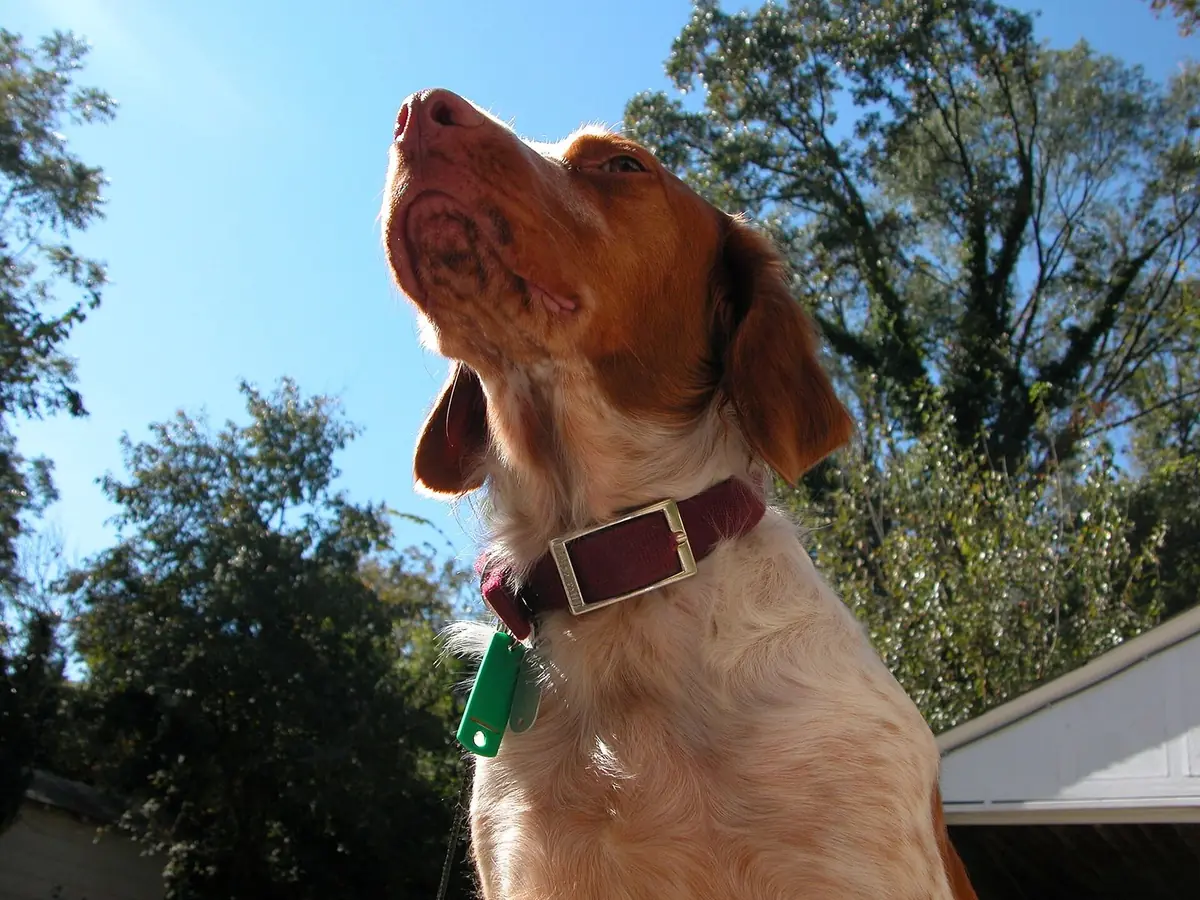
The Danbury Animal Welfare Society is a private nonprofit shelter at 147 Grassy Plain Street in Bethel, on Route 53, open for cat and dog adoptions from 10 a.m. to 4 p.m. every day; phone 203-744-3297. It began in 1974 as volunteers helping dogs at the Danbury pound. Planning to adopt? Your clinician has to support each animal by name, so a new arrival is not on an existing letter.
The police department's phone list gives the Dog Warden at 203-748-6456 for a stray or problem dog. Routine police calls go to 203-797-4611, and emergencies to 911.
The city's parks list names Miry Brook Dog Park, 76 Miry Brook Road, its first, with two fenced areas so dogs run with others their size, and the newer Margerie Reservoir Dog Park at 18 Peck Road. Bear Mountain Reservation, 17 Bear Mountain Road, is a dog-friendly trail spot.
Trained service animals ride both. Any other animal, ESAs included, rides a HART bus only at 20 pounds or less and inside a carrier, while Metro-North expects a pet to stay in a kennel or other carrier, or under secure leash control, the whole way.
HARTransit welcomes service animals on its vehicles, and a rider booking a trip through HART's schedulers should mention the animal when booking. HART's office is at 62 Federal Road; customer service answers at 203-744-4070, extension 1.
HART's accessibility page lets pets up to 20 pounds ride in carriers designed for that purpose, and drivers cannot help carry them. An ESA rides under that pet rule, since it has no service-animal standing on the bus.
HART's rider pages publish no rule that lets a pet over 20 pounds, or one outside a carrier, ride, and they give ESAs no service-animal standing. The Danbury - Brewster shuttle to Metro-North's Harlem Line is a HART vehicle too, so call before you plan on it.
Branch trains stop at Danbury, Bethel, Redding, Branchville, Cannondale, Wilton and Merritt 7 before South Norwalk, where most trips change, as the October 2026 timetable shows. Metro-North's pet rule in the MTA guide asks for a kennel or similar container, or a secure leash, throughout the journey, with no offense to other riders; service animals follow separate policies.
A trained service dog in Danbury can get a fee-free license under state law, rides HART as a service animal and may enter stores and restaurants; an ESA holds none of those three rights, though a small one may ride HART as a carried pet. Task training, not paperwork, makes that difference.
Yes, with approval: WCSU, the state university on White Street, takes ESA requests for campus housing through AccessAbility Services, a four-office committee reviews each one, and an approval lasts one academic year.
Reach AccessAbility Services at (203) 837-8225 or aas@wcsu.edu, Monday to Thursday 8 a.m. to 4:30 p.m. and Friday 8 a.m. to 4 p.m. Its ESA guideline says that with less than 60 days' notice before move-in, WCSU cannot promise to meet the request in the first semester. Documentation comes from a provider with an ongoing therapeutic relationship with you, from your home state or Connecticut and not a relative, and WCSU also has its own provider form asking for a diagnosis and the date of your last appointment.
Once approved, you sign an ESA agreement, a roommate agreement and WCSU's own ESA registration form, a campus record only, and the animal stays in your assigned room, suite or apartment, never in classrooms or dining halls. It must also be licensed under local rules. Otherwise the housing policies allow no pets beyond non-meat-eating fish in tanks of up to 10 gallons, in Fairfield, Litchfield, Newbury, Centennial, Grasso and Pinney halls alike. Talk with the office before buying anything for campus housing.
The Naugatuck Valley campus of CT State Community College runs a location in downtown Danbury. Its disability office lead for Danbury answers at 203-437-9699, and the college says emotional support animals must be approved ahead of time and generally stay in approved spaces. For campus housing questions elsewhere in Connecticut, see our guide for college students.
Apartments and multi-family homes cluster Downtown and in the central and eastern areas around it, condominium and townhouse developments appear in the northeast and east, and the northern and southern edges are mostly single-family homes, according to Danbury's 2023 Plan of Conservation and Development. We serve every area by telehealth; the kind of building mostly decides who reads your request.
| Area in the plan | Where | Homes there | Density |
|---|---|---|---|
| Downtown | Main Street and nearby streets | Old homes on small lots up to apartment buildings such as Kennedy Flats and Brookview Commons II | Wide range |
| Central Residential | Around Downtown | Single-family and multi-family homes and apartment buildings | Medium to high |
| Planned Neighborhood Development | The western edge | The Reserve and the Summit, from townhomes to large apartment buildings | Medium to high |
| Eastern Residential | By the Bethel town line | Townhouse and large multifamily developments hold the greatest share of homes | Low to medium |
| Northeast Residential | The city's northeast | A mobile home park, townhouses, single-family homes and large condominium developments | Low to medium |
| Southwest Residential | South of I-84, west of Route 7 | Mostly single-family homes, beside major industrial uses | Low to medium |
| Northwest Residential | North of I-84, west of Route 37 | Single-family homes on one- to two-acre lots | Low |
| Southern Residential | The far south, east of Route 7 | Large-lot homes and open space, plus small-lot homes around Lake Waubeeka | Rural, large lots |
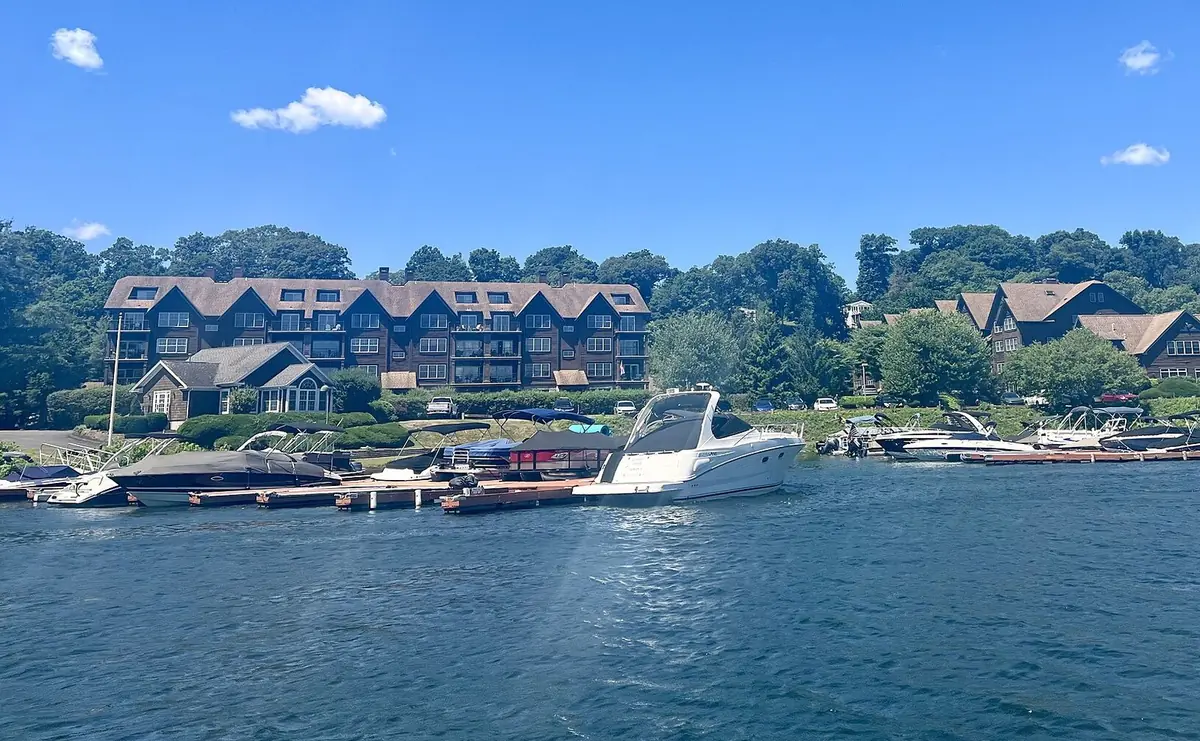
A refused ESA at home goes to CHRO, the Commission on Human Rights and Opportunities, whose Housing Discrimination Unit sits in Hartford; a store or other public place turning away a service dog goes to CHRO's Southwest Region Office in Bridgeport; unsafe apartment conditions go to the city's housing inspectors; and free legal help starts at Statewide Legal Services. Whatever the problem, date your written request and keep a copy.
Every housing discrimination complaint brought to the state commission goes through this unit, so a refused ESA belongs here. File the formal complaint within 300 days of the alleged act, as Section 46a-82 requires, and ask how the unit is treating untrained ESAs after HUD's memo.
Housing Discrimination Unit, 450 Columbus Boulevard, Suite 2, Hartford · (860) 541-3403 · chro.housing@ct.govDanbury cases about jobs, credit or public places, a shop turning away a trained service dog for instance, belong to this regional office on CHRO's town list. Housing complaints do not.
Southwest Region Office, 350 Fairfield Avenue, 6th Floor, Bridgeport · (203) 579-6246 · chro.southwest@ct.govStatewide Legal Services is generally where free legal help starts for Connecticut residents with low income; staff can advise by phone or refer you on. Connecticut Legal Services covers Danbury, though its locations page lists no office in the city.
1-800-453-3320 for intake · 1-800-559-1565 for eviction or subsidy lossThe Connecticut Fair Housing Center represents people who face housing discrimination, and its site's Get Help menu offers a Disability Letter Generator, a tool for drafting your request.
60 Popieluszko Court, Hartford · 860-247-4400For no heat, no hot water or other unsafe conditions rather than an ESA refusal: after asking the landlord first, a tenant may request an inspection at any time through the city's Housing Program.
311 from a landline · 203-744-4311 by cell · inspectors 203-797-4625Tenants in the Authority's own housing should ask in writing how it takes reasonable accommodation requests; voucher holders renting privately write to their owner.
2 Mill Ridge Road, Danbury · (203) 744-2500The name and signature of the clinician who evaluated you, the Connecticut license that clinician holds, every animal the clinician supports, and the date the letter expires, all in a digital document kept in your account. It is written for housing, so stores and airlines fall outside its purpose.
Yes. Since a 2024 amendment, Section 19a-906 lets an audio-only phone call count as telehealth in Connecticut; texts, faxes and emails still do not. Every evaluation here has a live session, by phone or video as you and your clinician agree.
Yes. An ESA dog needs no task training; it needs a clinician's finding that it helps with your disability-related need, and then your landlord's agreement to the accommodation. Task training is what makes a service dog, and every Danbury dog still needs its yearly license.
Yes. An altered dog costs $8.00 a year to license, against $19.00 for an unaltered one, paid in June at the Town Clerk, 155 Deer Hill Avenue, and each month late from July 1 adds $1.00.
No. None of the city's three license documents lists a service-dog fee or exemption. State law fills the gap: Section 22-345 waives the fee when the owner of a trained service dog has a disability, mental disabilities counted, so raise it with the clerk. An ESA pays $8.00 or $19.00.
Yes to pets: HART lets an animal up to 20 pounds ride in a carrier made for that purpose, and drivers cannot help carry it. HART's pages welcome only trained service animals outside that rule, so plan on an ESA riding as a pet. HART customer service answers at 203-744-4070.
Yes. Metro-North lets a pet ride inside a kennel-type carrier or on a firmly held leash for the entire trip, as long as it does not disturb other passengers. Service animals have separate policies, and most Danbury Branch trips involve a change at South Norwalk.
Not on its own. WCSU's AccessAbility Services wants documentation from a provider with an ongoing therapeutic relationship with you, has its own provider form, sends each request to a four-office committee and approves an ESA for one academic year. Call (203) 837-8225 before you buy anything for campus housing.
Not a city shelter: DAWS, the Danbury Animal Welfare Society, is a private nonprofit at 147 Grassy Plain Street in Bethel, on Route 53, open for cat and dog adoptions from 10 a.m. to 4 p.m. daily; phone 203-744-3297. For a stray or problem dog in Danbury, call the Dog Warden at 203-748-6456.
To the Authority, at 2 Mill Ridge Road, (203) 744-2500: ask in writing how it handles reasonable accommodation requests and keep a copy. If you use a voucher in a private apartment, the request goes to that private owner.
File with CHRO's Housing Discrimination Unit, (860) 541-3403, no later than 300 days after the alleged act, the limit set by Section 46a-82; before that, Statewide Legal Services at 1-800-453-3320 can advise you for free if your income qualifies. If no answer comes at all, send a dated follow-up and keep copies of both requests.
Your clinician, licensed in Connecticut, talks with you live after checkout, and a signed letter comes only when that clinician supports one.
