
If you found an old Virgin America pet-policy article, its booking advice no longer describes a separate operating airline. American Service Animals (ASA) explains the move to Alaska and how to find the rules for the flight you can actually book today, without confusing historical ESA policies with current requirements.
Virgin America is a retired airline brand
You cannot make a new pet reservation with Virgin America as a separate airline. Its customer-facing flight and booking operations became part of Alaska Airlines in 2018. Alaska's official integration update explains that tickets would be sold under the Alaska name from April 25, 2018.
That matters when an old search result tells you to call Virgin America, pay a historical pet charge, or complete a retired animal form. Those instructions describe a past operation. Begin with the airline that will operate your proposed flight, even if you once traveled the same route on Virgin America.
A short timeline of integration with Alaska Airlines
The practical turning point for travelers was April 25, 2018: Alaska's website, app, flight numbers, and reservation system became the customer channels for the combined operation. Alaska's May 1 update confirmed the move to one reservation system and airport brand.
Aircraft appearance changed more gradually. The integration announcement explicitly noted that some planes could still carry Virgin America paint after the booking transition. An old aircraft photograph therefore does not establish that a separate Virgin America booking policy remained available. For pet planning today, the important evidence is the current itinerary and operator, not the color scheme in a historical image.
Which airline operates the trip you can book today?
Read the operating-airline details for each flight, not just the website where you found the fare. Make a simple itinerary note with the operator, flight number, date, route, and any connection. Use that information when asking about animal travel, so the answer refers to the trip you actually intend to take.
Check the return journey separately. A convenient outward flight does not resolve a different connection on the way home. If a reservation changes, revisit the animal arrangement instead of relying on your first conversation. Keep the current policy link and confirmation with the rest of your travel documents.
For another current-airline planning example, our United guide shows how carrier fit, route, and animal category affect the questions to ask. Its details should not be copied onto an Alaska itinerary.
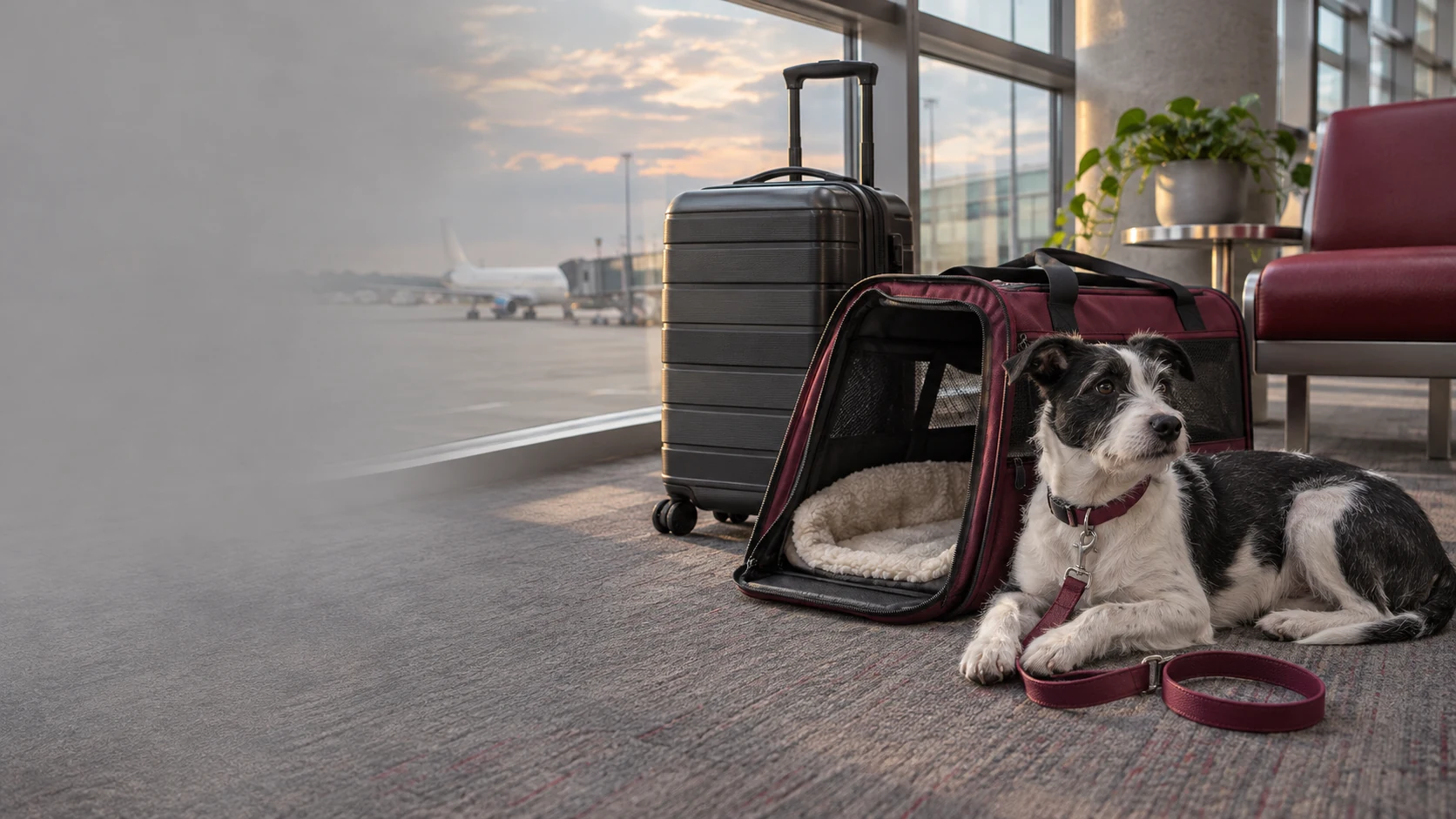
 Identify the current flight operator before choosing the animal's travel arrangement.
Where to check current Alaska pet and service-dog instructions
Start with Alaska's current pet-travel overview. It directs travelers to review the relevant policies, book the passenger ticket, and contact the airline to reserve animal space. It also links separate cabin, baggage-compartment, destination, and service-animal guidance.
The overview now covers Alaska and Hawaiian travel, but that is not a reason to treat every itinerary as identical. It specifically directs travelers with another airline segment to contact that carrier about space and charges. Use the policy linked from the current official page, rather than a saved form found through an old Virgin America search.
If a policy page will not load, ask the operating airline to clarify the requirement before relying on a third-party summary. Write down the answer and the itinerary it concerns. Avoid buying a carrier solely because an old blog called it airline approved.
Questions about cabin and baggage transport on the current route
Alaska's overview describes under-seat cabin travel and a baggage-compartment option, both subject to availability. It identifies breed, date, aircraft, and destination restrictions that can affect the applicable option. It also says baggage-compartment pets are not transferred to other carriers; travelers must arrange the required collection and recheck.
Use the following questions to get a complete answer for your trip:
- Is this animal eligible for the proposed transport option on every segment?
- What current carrier measurements and construction requirements apply?
- How is animal space confirmed, and what happens after an itinerary change?
- Which health, identification, or destination documents are required, and when?
- What is the current total charge, and where must the animal be presented for check-in?
These are planning questions, not permission to transport an animal. Give yourself time to resolve them and to discuss your particular animal's travel needs with its veterinarian. A bag's advertised dimensions alone do not tell you whether the animal is comfortable inside it.
Why old Virgin America ESA forms do not guide a new trip
Current DOT rules distinguish task-trained service dogs from emotional support animals. An ESA letter is not a substitute for disability-related task training or the operating airline's required service-animal process. Do not reuse a retired form as proof that today's airline must accept an animal without a pet charge.
Read how current ESA air-travel categories work and current ESA and PSD terminology from ASA if the distinction is unfamiliar. You may ask ASA about an existing assessment; booking and transport questions should go to the airline. ASA is not affiliated with Alaska or the retired Virgin America brand.
For questions about your own clinical needs, American Service Animals (ASA) can help you explore an assessment where available. The assessment below is separate from airline booking. Evaluation does not guarantee documentation or travel approval and cannot restore a retired airline's policies.

Find out if an ESA letter is right for you
A few guided questions. Your personal details come last.
Questions about the retired Virgin America pet policy
Can I still make a Virgin America pet reservation?
No. Virgin America is no longer a separately bookable airline. Find the operator of your current itinerary and use its animal-travel process. An archived Virgin America booking page, fee table, or pet confirmation from a previous trip cannot create a new reservation.
Why do searches for Virgin America pet rules lead to Alaska Airlines?
Virgin America's customer booking operation was integrated into Alaska in 2018. That history explains the connection. It does not make every historical Virgin America rule a current Alaska rule, so use Alaska's official present-day instructions for a trip operated by that airline.
Is Virgin America the same airline as Virgin Atlantic?
No. Virgin America was the U.S. airline integrated into Alaska. Virgin Atlantic describes its own separate airline. Similar branding does not make their animal policies interchangeable. If your itinerary names Virgin Atlantic, consult that operator's current requirements.
Should I use an old Virgin America emotional support animal form?
No. Ask the current operator which process applies to your animal and route. Do not assume a historical accommodation or an old form establishes eligibility today. Keep existing clinical records for their proper purpose, separate from the airline documents requested for this journey.
Do all Alaska-related flights have identical animal transport rules?
Do not assume that they do. Check the actual operator and transport option for each segment, especially a connection involving another carrier. Ask which instructions apply to the specific flight and what must be arranged separately before considering the animal's journey confirmed.
Which pet-travel details should I recheck after finding the current airline?
Recheck animal eligibility, available transport options, carrier fit, reservation confirmation, documents, current charges, and arrival procedures. Include the return trip. Save the airline's response and revisit the arrangement if the itinerary changes, rather than relying on a retired Virgin America policy.
