
PTSD Emotional Support Animal and Service Dog Letters in Alaska
Post-traumatic stress can follow combat, an assault, a crash or a disaster, and an animal can make nights and crowds easier to face. Take the free screening; an Alaska-licensed clinician then decides if an ESA letter or a psychiatric service dog letter is the better fit. Veterans can use the finder below to reach VA care and Vet Centers.
Where Alaskans Find PTSD Care
Alaska VA and Vet Center Finder
Choose your part of Alaska and the kind of help you want. You will get the VA site and the Vet Center that serve it, with addresses and phone numbers from VA.
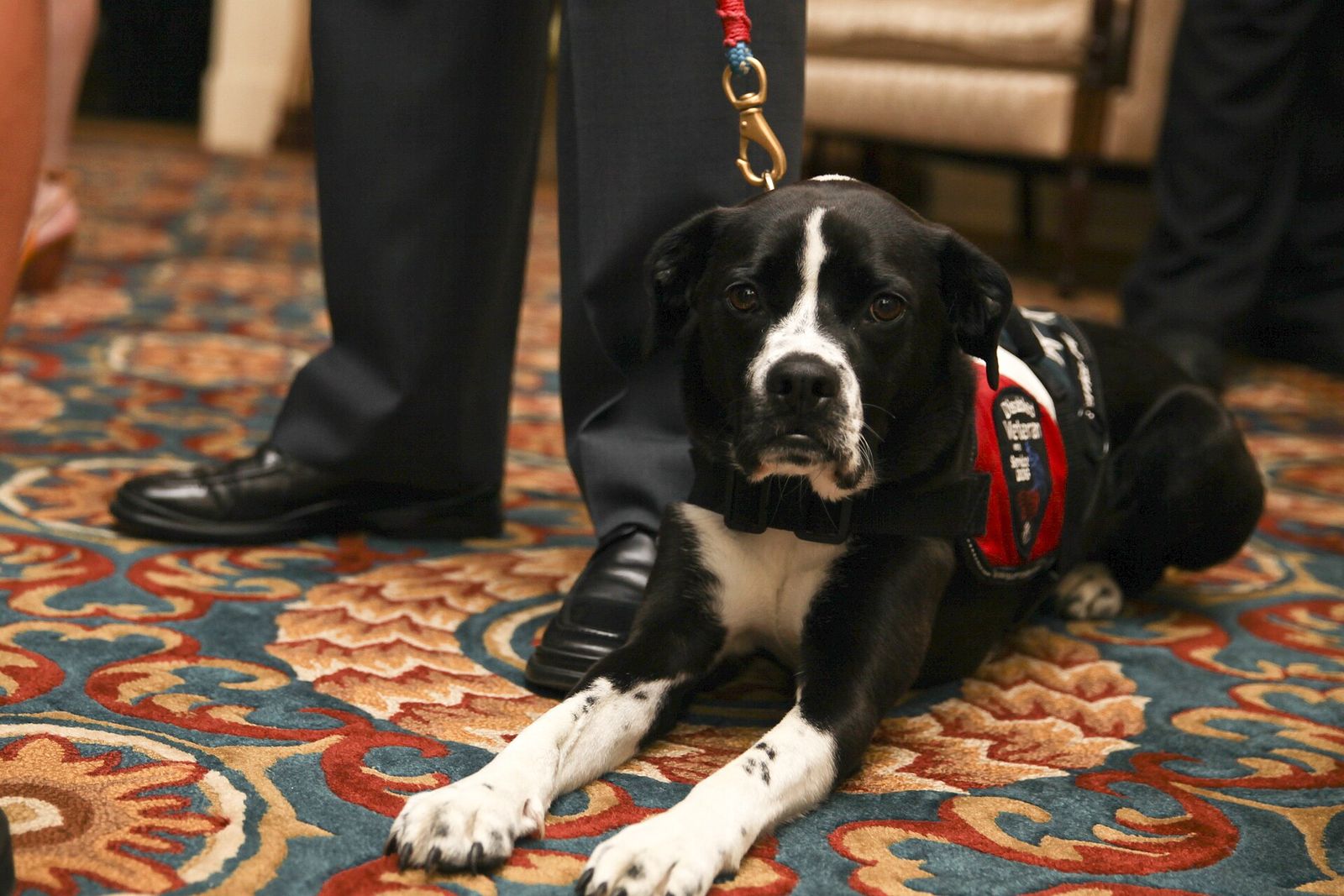
Service Dogs, VA Benefits and the Anchorage Pilot
VA does not hand out service dogs. Under 38 CFR 17.148 it pays for veterinary care and equipment for approved guide, hearing and mobility service dogs trained through an accredited program. When a mental health condition is the main cause of substantial mobility limits, the request starts with a VA mental health provider. Separately, the 2021 PAWS Act set up a five-year pilot in which veterans with PTSD train future service dogs as part of their care, and Anchorage was one of five sites VA named in 2022.
What VA covers
Vet care, a harness or backpack, and travel to get an approved dog.
Where dogs come from
Programs accredited by ADI or the International Guide Dog Federation.
Mental health mobility
Begins with a VA mental health provider and care team review.
PAWS pilot
Ask the Anchorage VA whether it is taking participants.
PTSD Support Animal or Trained Service Dog?
Emotional support animal
- Helps by its presence; no task training required.
- An ESA letter supports a housing accommodation request.
- Not allowed on the grounds of VA health care facilities.
- Airlines may treat it as a pet; Alaska Airlines stopped accepting ESAs in January 2021.
Psychiatric service dog
- Trained for tasks, such as interrupting a nightmare or a panic episode.
- Goes with its handler in public places under the ADA.
- Admitted on VA property with its handler.
- Alaska Airlines takes up to two service dogs with the DOT form.
Alaska ESA and PSD Pricing for PTSD
Clear pricing for emotional support animal and psychiatric service dog letters written by a licensed mental health professional. Your screening is free, and you pay only if a clinician supports a letter and you decide to continue.
ESA Housing Letter For One Pet
Best option for most renters with one emotional support animal
- Free online screening with a licensed psychotherapist
- Telehealth evaluation when clinically indicated
- Letter written for ESA housing requests
- Digital delivery within 24-48 hours after payment
- Follow up clarification for landlords included
ESA Housing Letter For Multiple Pets
For people who have more than one emotional support animal in the home
- Free clinical screening that covers up to three ESA dogs or cats
- All approved animals listed together on a single ESA housing letter
- Letter tailored for apartments and rental homes
- Digital delivery within 24-48 hours after payment
- Support for landlord questions about pet deposits and rent
Psychiatric Service Dog Evaluation
For people who may qualify for a task-trained psychiatric service dog
- Free initial screening with a licensed psychotherapist
- Telehealth evaluation focused on symptoms and the tasks the dog is trained to do
- Letter describing the disability-related need and task support
- Clinically grounded documentation, not a generic certificate
- Follow up clarification for housing providers included
Bundle Packages
Save more with combined document bundles
ESA Letter + Certificate Bundle
ESA letter and certificate in one package
- ESA letter from a licensed professional
- ESA certificate with QR code verification
- Digital delivery within 24-48 hours after payment
- Valid for 1 year with renewal reminders
PSD Letter + Certificate + ID Card
Complete PSD documentation: letter, certificate and ID card
- PSD letter from a licensed professional
- PSD certificate with QR code verification
- PSD ID card with photo and barcode
- Digital delivery within 24-48 hours after payment
Three Legs to an Alaska PTSD Letter
Screen at your pace
Answer questions about symptoms, your animal and your home; you can stop and come back.
Talk with a clinician
An Alaska-licensed clinician goes over your answers and offers a video visit when that is appropriate.
Get the outcome
If a letter is supported and you pick a plan, it arrives by email. No approval, no charge.
Letters Alaskans With PTSD Order
ESA housing letter
For a request to an Alaska landlord, manager or association.
Two or more animals
Puts every animal your clinician supports on one letter.
PSD letter
For a dog trained to do tasks for PTSD.
Card and certificate
A summary that comes with some bundles.
Help in Alaska That Does Not Wait for a Letter


Careline Alaska
Free and around the clock at 877-266-4357; funded by the State of Alaska.
Veterans Crisis Line
Dial 988 and press 1, or text 838255.
Vet Centers
Counseling in Anchorage, Fairbanks, Wasilla and Soldotna; call 877-927-8387.
Alaska and Federal Rules for PTSD Animals
Rentals
AS 18.80.240 bars refusing housing because of a mental disability; complaints go to the Commission within 300 days.
Public places
AS 11.76.130 makes it a class B misdemeanor to intentionally bar a person's certified service animal from a public accommodation.
HUD in 2026
HUD now presumes requests reasonable only for trained animals, so an ESA request rests on your letter and state law.
Alaska PTSD Questions on the Waypoint List
Can PTSD qualify me for an ESA letter in Alaska?
Yes, if a licensed clinician finds that post-traumatic stress disorder substantially limits a major life activity and that your animal helps with those limits. Veterans and civilians are evaluated the same way.
Will the VA give me a service dog for PTSD?
VA does not provide service dogs. It can pay for veterinary care and equipment for an approved service dog from an accredited program, and when a mental health condition is the main cause of substantial mobility limits, the request starts with a VA mental health provider.
What is the PAWS pilot in Anchorage?
The 2021 PAWS Act created a five-year VA pilot in which veterans with PTSD train future service dogs as part of their care. Anchorage was one of the five sites VA named in 2022, so ask the Anchorage VA whether it is taking participants.
Can I bring my emotional support animal to a VA appointment in Anchorage?
No. VA says emotional support animals are not allowed on the grounds of its health care facilities and cannot come to appointments. Trained service dogs are allowed.
Where are the Vet Centers in Alaska?
There are Vet Centers in Anchorage, Fairbanks and Wasilla, plus a Kenai outstation in Soldotna. The finder on this page lists each address and phone number.
Who can I call right now?
Call or text 988, and veterans can press 1 for the Veterans Crisis Line. Careline Alaska also answers around the clock at 877-266-4357, and you do not need to be suicidal to call.
Keep Going in Alaska
General information for Alaskans, current as of October 2026, and not legal or medical advice. VA programs, sites and phone numbers change, so confirm with VA before you travel. A letter is not a substitute for PTSD treatment, and screening does not guarantee a letter. In a crisis, call or text 988; veterans can press 1.
Take the First Bearing Today
A short screening, then a clinician licensed in Alaska who understands how an animal can steady life with PTSD.